Best Content Angles for SaaS Affiliate Programs
A practical guide to SaaS affiliate content angles, including tutorials, comparisons, workflow guides, pricing explainers, alternatives, and buyer checklists.
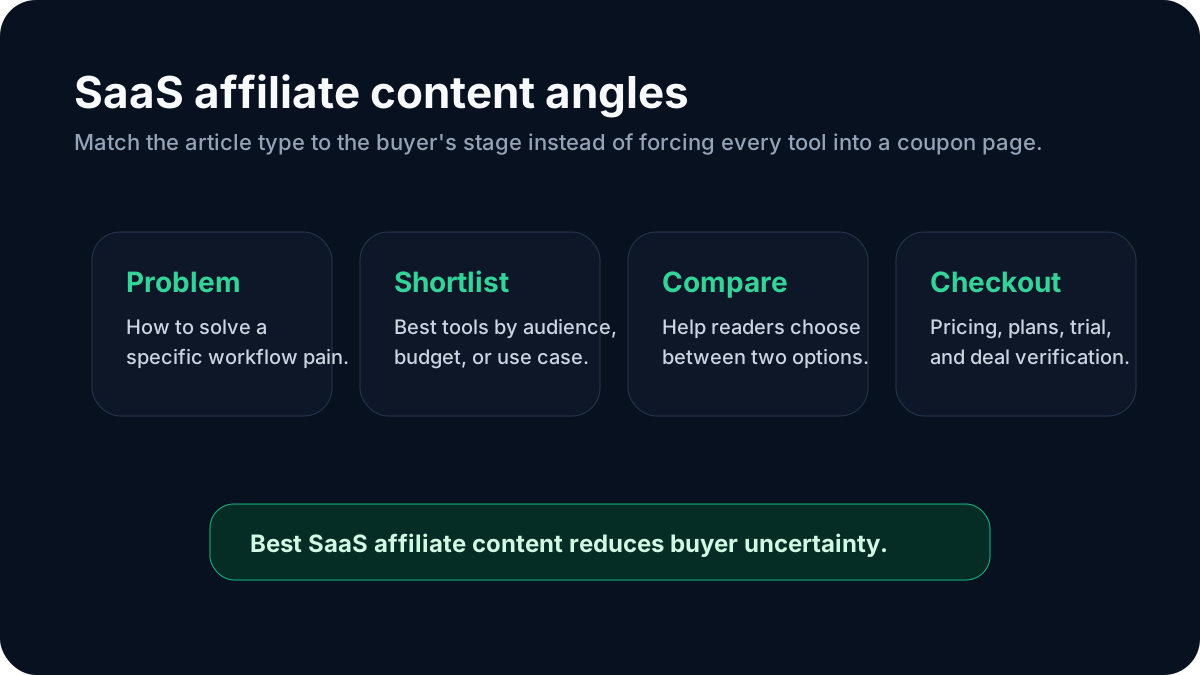
- SaaS affiliate content works best when it reduces buyer uncertainty.
- Do not force every program into a coupon page or generic review.
- Use different article types for problem-aware, comparison-stage, and checkout-stage readers.
SaaS affiliate content is easy to make generic. Many pages repeat the same pattern: what the tool is, a few features, a commission mention, and a button. That is not enough in a competitive software niche.
Good SaaS affiliate content reduces buyer uncertainty. It helps the reader understand whether the product fits their workflow, budget, team size, skill level, and next step.
Start with the buyer stage
A reader searching “best email marketing tools for creators” is not in the same place as a reader searching “ConvertKit vs Notion affiliate program.” One is comparing product solutions. The other may be evaluating publisher opportunity or content fit.
For SaaS affiliate content, match the article type to the buyer stage:
- Problem-aware: tutorials, workflows, use-case guides.
- Solution-aware: best tools, alternatives, category comparisons.
- Decision-stage: product comparisons, plan explainers, buyer checklists.
- Checkout-stage: pricing, trial, discount, coupon, and account setup guidance.
Tutorials can attract better readers than generic reviews
A tutorial gives context. Instead of saying a product is useful, it shows the problem it helps solve. This can work especially well for software that has a learning curve.
Examples:
- How to build a newsletter welcome sequence.
- How to launch an ecommerce store without custom code.
- How to organize a content calendar for a small team.
The affiliate link feels natural when the tool is part of the workflow, not forced into the page.
Comparisons help readers make a decision
Comparison pages are powerful because the reader already knows at least two options. Your job is not to declare a random winner. Your job is to explain which option fits which situation.
A strong comparison should include:
- Audience fit.
- Commission and buyer economics if the page is publisher-facing.
- Pricing or plan considerations if the page is buyer-facing.
- Main limitation of each option.
- A clear “choose this if” section.
Pricing and plan guides can convert well
Many SaaS buyers hesitate because they do not understand plans, limits, free trials, annual savings, or upgrade paths. A pricing guide can help if it stays accurate and avoids fake urgency.
For affiliate publishers, this type of content needs regular updates. Pricing pages change. Plan names change. Trial rules change. If you cannot keep the page current, keep the claims softer and point readers to verify checkout details.
Alternatives pages work when the angle is specific
“Best alternatives” pages often become weak when they list random tools. They work better when the reason for switching is specific:
- Easier for beginners.
- Better for agencies.
- Cheaper for small teams.
- More flexible for ecommerce.
- Better for creators or newsletter operators.
Specific alternatives make the affiliate recommendation more useful.
Avoid fake hands-on claims
If you have not used a product directly, do not pretend you have. You can still create useful content by analyzing public terms, pricing, use cases, limitations, and buyer fit. The tone should be clear and careful.
Readers trust pages that admit tradeoffs. A page that says every tool is perfect feels like a template. A page that explains who should skip a product feels more useful.
Final thought
SaaS affiliate content should not be only a review or coupon page. Build a content path: problem guide, shortlist, comparison, pricing explainer, and program page. That path gives readers more ways to understand the product and gives your site more chances to capture the right intent.

Steven Doan
Founder & Affiliate Program Researcher
Steven Doan researches affiliate programs, payout models, approval paths, and publisher fit for AffiBest.
Frequently asked questions
What is the best SaaS affiliate content type? +
There is no single best type. Tutorials work for problem-aware readers, comparisons work for decision-stage readers, and pricing or plan explainers work near checkout.
Do SaaS affiliate programs need reviews? +
Reviews can help, but they should not be fake hands-on claims. A useful SaaS affiliate page can also be a workflow guide, comparison, checklist, or use-case article.
Are coupon pages enough for SaaS affiliate traffic? +
Usually not by themselves. Coupon pages can help near checkout, but SaaS buyers often need education, use-case clarity, and plan guidance before they click.