Home / Compare / ConvertKit (Kit) Affiliate vs Notion Affiliate Program
Affiliate program comparison

ConvertKit vs Notion Affiliate Program (2026)

ConvertKit and Notion can both look attractive on paper, but they serve very different audiences. This comparison helps you decide which affiliate program fits your content angle before you send traffic.

Compare the two programs by commission model, cookie window, payout rules, approval path, and the type of publisher most likely to convert each offer.

Steven Doan profile image Compared by Steven Doan Methodology

Quick verdict

ConvertKit (Kit) Affiliate is the safer editorial pick

ConvertKit is the safer editorial pick for creator-led affiliate content because the buyer intent is narrower: newsletters, courses, audience building, and email marketing. Notion can still work, but it needs productivity or workspace content rather than generic SaaS list traffic.

View editor’s pick →
Editor’s pick
ConvertKit (Kit) Affiliate
marketing · in house
30%
Recurring

Best for creator, newsletter, and course-building audiences.

Notion Affiliate Program
productivity · in house
50%
Recurring

Best for productivity, template, workspace, and team-system audiences.

Pick ConvertKit if

Your audience wants to grow a creator business

ConvertKit is easier to explain when your content already talks about newsletters, courses, lead magnets, creator funnels, or email list growth. The program fits readers who are closer to a marketing decision.

View ConvertKit (Kit) Affiliate →
Pick Notion if

Your audience wants a workspace or template system

Notion makes more sense when your traffic comes from productivity, team workflow, creator operating systems, project planning, or template-based content.

View Notion Affiliate Program →
Skip both if

You cannot create useful education around the tool

Both programs need context. If your content only says “this pays well” without helping the reader choose, setup, or use the tool, a broader beginner-friendly collection may be safer.

Side-by-side

Affiliate terms comparison

Feature ConvertKit (Kit) Affiliate Notion Affiliate Program
Network in house in house
Commission rate 30% 50%
Recurring? ✓ Yes ✓ Yes
Cookie duration 90 days 90 days
Min payout $50 $10
Payment schedule monthly monthly
Approval instant manual
Editorial rating ★ — ★ —

Terms can change. Always verify live commission, payout, and approval details before sending paid traffic or building a full content cluster.

ConvertKit (Kit) Affiliate

Choose this route when your readers are already thinking about email lists, creator funnels, or audience monetization.

✓ Pros
  • Cleaner buyer intent for newsletter, course, and creator-business content.
  • Recurring commission can match long-term educational content better than one-off deal pages.
  • Good fit for tutorial funnels, comparison pages, creator stack guides, and audience-building checklists.
✗ Cautions
  • Less natural for broad productivity or general business traffic.
  • Needs trust-building content; a thin coupon page is unlikely to explain the product well.
  • Program terms should still be verified before building a large cluster around it.

Notion Affiliate Program

Choose this route when your content naturally teaches workspace setup, team organization, or productivity systems.

✓ Pros
  • Strong fit for productivity, workspace, project planning, and template-led content.
  • Broad brand awareness can help if readers already use or recognize Notion.
  • Useful for content that teaches a specific workflow rather than only comparing payouts.
✗ Cautions
  • Broad awareness does not automatically mean affiliate conversion intent.
  • Manual approval can create more uncertainty for new publishers.
  • A productivity audience may need a different funnel than a creator-email audience.

Deep guide

How to decide between ConvertKit (Kit) Affiliate and Notion

Read this section when you want the strategy behind the table: audience fit, content angles, risk, and the safest way to test either program.

Back to verdict →

TL;DR: the cleaner pick depends on buyer intent

ConvertKit is the cleaner pick if your content helps creators build an email list, sell courses, grow a newsletter, or turn an audience into a small business. Notion is the better fit when your audience wants a workspace, productivity system, team dashboard, or template-led workflow.

The practical difference is not just commission. It is the reader’s next step. Someone searching for “best email marketing platform for creators” is closer to a ConvertKit decision than a generic productivity reader is to a Notion upgrade. That does not make Notion weak. It means the content angle has to be tighter.
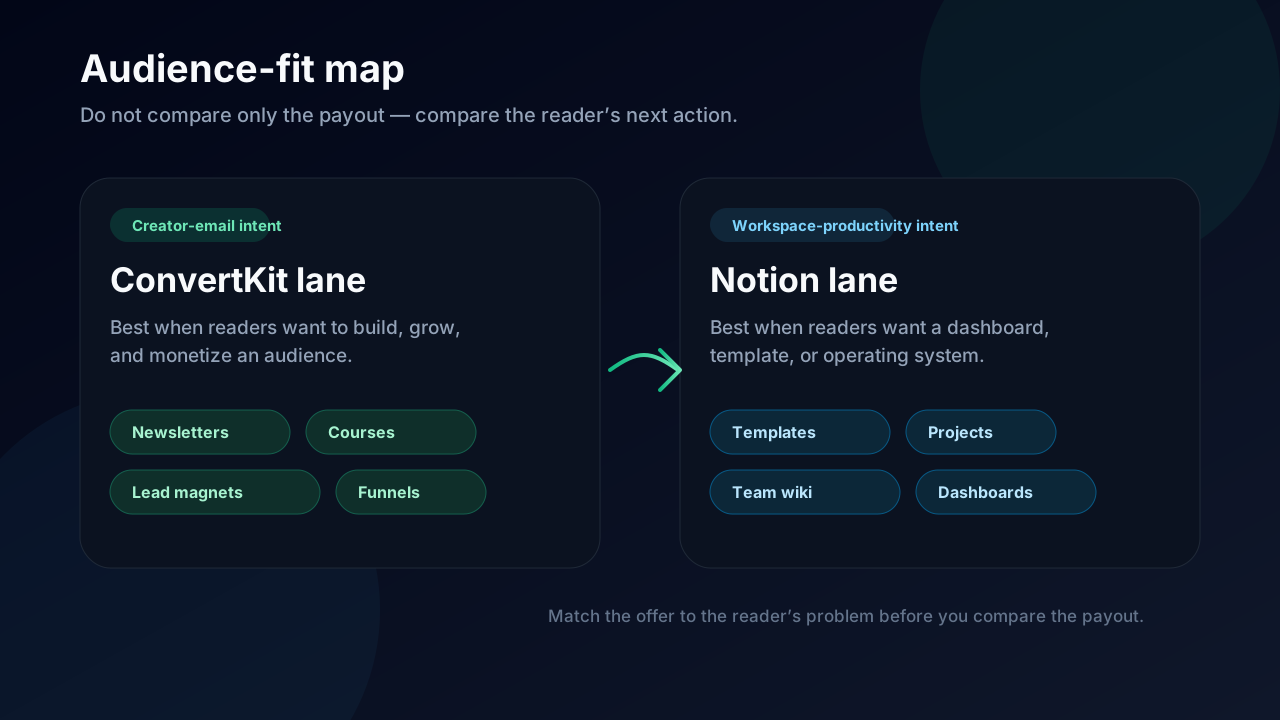
Audience-fit map comparing ConvertKit affiliate content with Notion affiliate content
This map separates creator-email intent from productivity-workspace intent. It helps you avoid treating both programs as interchangeable SaaS offers when the reader motivation is different.

Commission deep-dive

ConvertKit

ConvertKit’s main appeal is that the offer sits close to revenue-generating creator activity. A reader who wants to build a newsletter, launch a lead magnet, sell a course, or improve audience monetization can understand why an email platform matters. That makes the affiliate recommendation easier to frame in useful content.

The stronger play is not a generic “ConvertKit pays recurring commission” angle. The stronger play is content that helps the reader choose an email tool for a specific creator workflow: newsletter launch, course waitlist, creator landing page, automated welcome sequence, or migration from a basic email tool.

Notion

Notion can be attractive because the product is widely known and flexible. But flexibility cuts both ways. A broad productivity audience may love Notion content without being close to an affiliate conversion. The best Notion affiliate angle is usually more specific: templates, team dashboards, knowledge bases, project planning, creator operating systems, or client workflow setups.

If your audience already searches for Notion templates or workspace systems, the program can make sense. If your audience only reads broad “best SaaS tools” posts, Notion may get attention without producing the same commercial intent.

On paper, both programs can look similar enough to compare directly. They are both SaaS-related, both can support recurring revenue logic, and both can fit educational content. The deeper difference is how much explanation the reader needs before clicking.

ConvertKit usually has a simpler story for creators: build an audience, collect subscribers, nurture readers, and monetize over time. Notion usually needs a workflow story: organize a team, build a dashboard, manage projects, or use templates to make a system easier.

That is why the table in the Verdict tab should be treated as a starting point, not the entire decision. Always verify the live affiliate dashboard or program terms before making exact promises about payout timing, approval, or current commission rules.

Audience fit: where each program belongs

Choose ConvertKit when your site, channel, or newsletter already talks about audience growth. Good content angles include newsletter launch guides, creator stack pages, email marketing comparisons, course creator funnels, lead magnet tutorials, and small business email automation.

Choose Notion when your content is more about organization and workflow. Good angles include Notion template roundups, productivity systems, team knowledge bases, content calendars, student dashboards, agency client portals, and no-code operating systems.
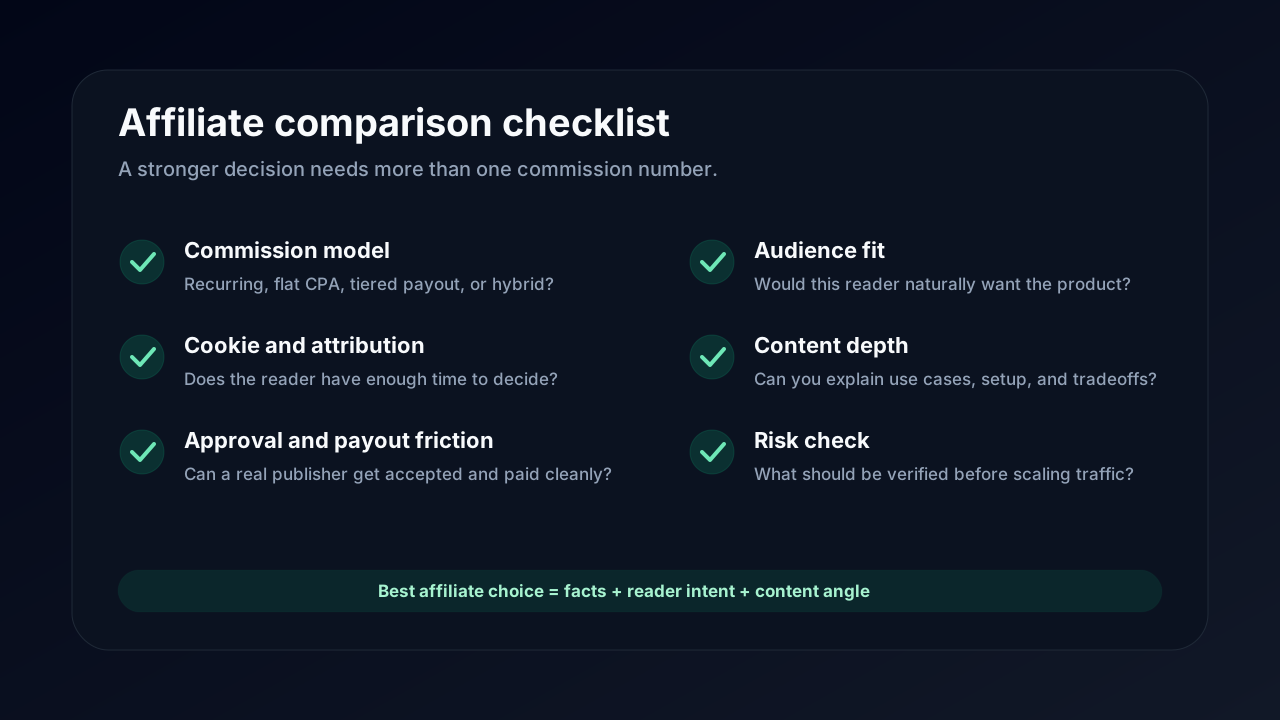
Affiliate program comparison checklist for commission, cookie, approval, and content fit
This checklist keeps the comparison grounded. Commission is only one box; approval, payout, audience fit, and content depth decide whether the program is worth building around.

Content strategy for promoting either program

The safest strategy is to separate the content lanes.

For ConvertKit, build content around creator business outcomes: starting a newsletter, building a landing page, sending a welcome sequence, growing an email list, or choosing an email tool before launching a course.

For Notion, build content around workflow outcomes: planning content, managing projects, building a creator dashboard, organizing a team wiki, or using templates to reduce admin work.

Trying to recommend both inside the same generic “best SaaS tools” article can dilute the message. A better structure is to use one program as the main recommendation in the relevant article and mention the other only when the reader’s problem genuinely changes.

Final verdict

ConvertKit is the better default pick for creator-led affiliate content because the product is easier to connect with a revenue-oriented reader journey. If your audience is trying to grow a newsletter, sell digital products, build a course funnel, or monetize an audience, ConvertKit gives you a clearer path to explain why the recommendation matters.

Notion is still useful, but it works best in a different lane. Promote it when your audience is looking for productivity systems, templates, project dashboards, or team workflows. In that context, Notion is not a weaker option; it is simply solving a different problem.

The safest next step is to choose the program that fits your strongest content angle first, then use the other as a comparison route only when it helps the reader make a clearer decision.
Steven Doan profile image
Compared by

Steven Doan

Founder & Affiliate Program Researcher

Steven Doan researches affiliate programs, payout models, approval paths, and publisher fit for AffiBest.

Affiliate program researchCommission and payout analysisPublisher fit evaluationSEO content strategy for affiliate sites

FAQ

Frequently asked questions

Can I promote both ConvertKit and Notion? +

Yes, but they should usually sit in different content angles. ConvertKit belongs naturally in creator, newsletter, and email marketing content, while Notion fits productivity, workflow, and template content.

Which program is better for beginners? +

ConvertKit may be easier for beginners who already write creator or newsletter content because the buyer intent is more specific. Notion can work too, but the content angle needs to be clearer because productivity traffic is broad.

Is the higher commission always the better program? +

No. A higher commission rate can still underperform if the traffic is not close to buying or upgrading. The better affiliate program is the one your audience can understand, trust, and act on.