Affiliate Cookie Duration Explained
A plain-English guide to affiliate cookie windows, attribution rules, payout timing, and why a longer cookie duration is not always the best program signal.
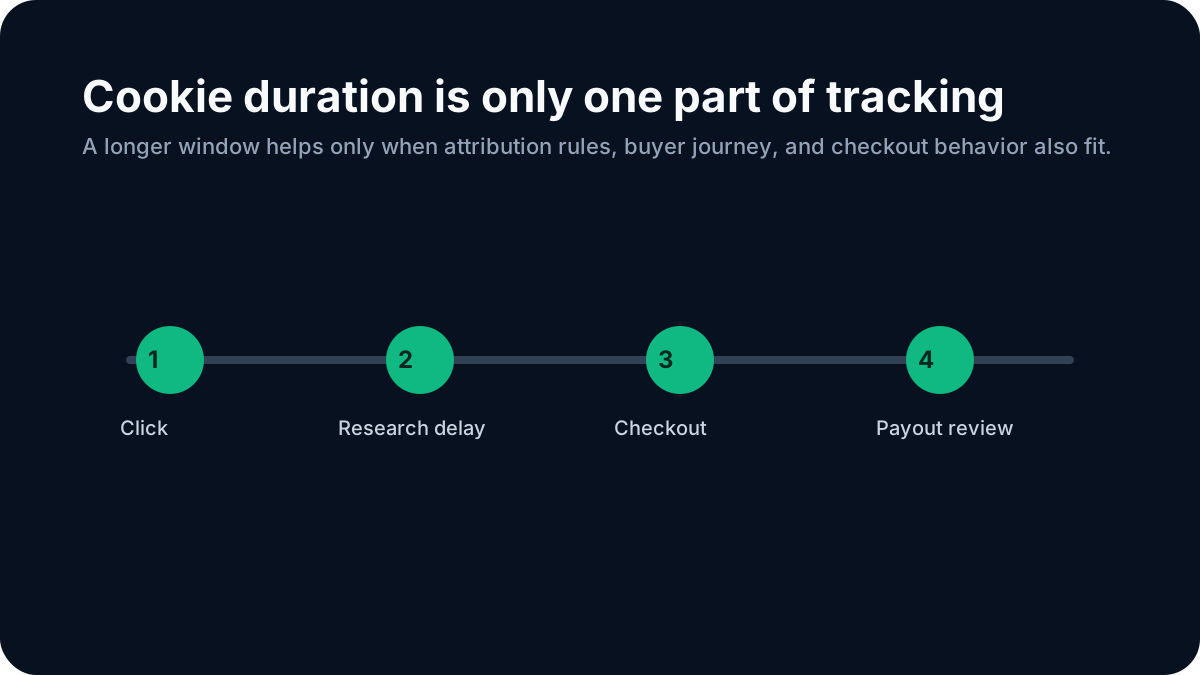
- Cookie duration is the tracking window after a user clicks your affiliate link.
- A long cookie window helps most when the buyer journey is slow or expensive.
- Attribution rules, device behavior, refunds, and payout review can matter as much as the cookie number.
Affiliate cookie duration is the amount of time a program may track a visitor after they click your affiliate link. If the visitor buys within that window and the sale qualifies under the program rules, the referral may be credited to you.
That sounds simple, but cookie duration is often misunderstood. A longer cookie window is useful, but it does not guarantee higher earnings.
What cookie duration means
If a program has a 30-day cookie, a visitor who clicks your affiliate link may be tracked for up to 30 days. If they purchase later inside that window, you may receive credit, depending on the program’s attribution rules.
Some programs use 7 days, 30 days, 60 days, 90 days, or longer. Some use different rules for different products, countries, partners, or campaigns.
Why longer is not always better
Longer cookie windows are valuable when the buyer journey is slow. Expensive software, business services, hosting, ecommerce platforms, and tools that require team approval may benefit from longer windows.
But if a product is low-cost and buyers usually decide immediately, a long cookie window may not change much. In that case, conversion rate, brand trust, landing page quality, and commission terms may matter more.
Attribution rules can change the outcome
Cookie duration does not tell the whole story. You also need to understand attribution. Some programs use last-click attribution, meaning another affiliate, coupon site, or paid ad click may overwrite your referral before purchase. Others have custom rules.
That is why a 90-day cookie with unclear attribution can be weaker than a 30-day cookie with a clean buyer path.
Device and checkout behavior matter
People often click on one device and buy on another. They may clear cookies, use private browsing, or return through a search ad. Tracking is never perfect.
This does not mean affiliate tracking is useless. It means you should avoid building your entire program judgment on the cookie number alone.
How to use cookie duration when choosing programs
Use cookie duration as one signal:
- Short journey: A shorter cookie can still work if purchase intent is immediate.
- Long journey: A longer cookie is more important for expensive, complex, or team-based purchases.
- Educational content: Reviews, tutorials, and comparisons benefit from a fair window because readers may return later.
- Coupon-only content: Cookie length may matter less if the user is already at checkout, but attribution competition can be higher.
Final thought
Cookie duration is a tracking window, not a promise. Treat it as part of a larger decision that includes audience intent, attribution rules, payout terms, and the type of content you are creating.

Steven Doan
Founder & Affiliate Program Researcher
Steven Doan researches affiliate programs, payout models, approval paths, and publisher fit for AffiBest.
Frequently asked questions
Is a 90-day cookie better than a 30-day cookie? +
Often, but not always. A 90-day cookie helps if buyers take time to decide. If most purchases happen immediately, the conversion path and commission quality may matter more.
Does a cookie guarantee I get paid? +
No. A cookie is only one part of tracking. Payment can still depend on attribution rules, qualified actions, refunds, cancellations, and the program's payout review process.
Should I avoid programs with short cookie windows? +
Not automatically. Shorter windows can still work when the traffic is high-intent and the purchase happens quickly after the click.