Beginner-friendly does not always mean instant money. It means the program has a clear buyer problem, understandable terms, and a content path a newer publisher can realistically build.
This collection ranks programs by publisher fit, realistic conversion path, payout shape, and the amount of content support a publisher usually needs before applying.
Best for: Beginner website tutorials, blogging guides, WordPress setup content, and small-site education
Bluehost is easy for beginners to understand because the buyer problem is concrete: someone needs hosting to start a website. That makes tutorials, setup guides, and beginner checklists straightforward to build.
Watch: Hosting is competitive, so beginners should avoid generic “best hosting” pages and focus on a narrow use case.
Best for: Small-business, creator, freelancing, and outsourcing content
Fiverr works for newer publishers because the content can be built around real service needs: logo design, website help, writing support, marketing tasks, or admin work.
Watch: The offer can become too broad quickly. Pick one service category or buyer situation before writing.
Best for: Creators, newsletter beginners, bloggers, and course-building audiences
ConvertKit is a cleaner beginner SaaS route when your content teaches creators how to build an audience. It is more focused than promoting every marketing tool at once.
Watch: It still needs buyer education. A reader who has not started building an audience may not be ready for a paid email platform.
A beginner-friendly affiliate program should help a new publisher build a clean first campaign. That means the buyer problem is understandable, the content angle is obvious, and the product does not require a long technical explanation before a reader can see the value.
It does not mean the program will convert without trust. A new publisher still needs useful content, clear recommendations, and a reason for the reader to click. The advantage is that the first content cluster is easier to plan.
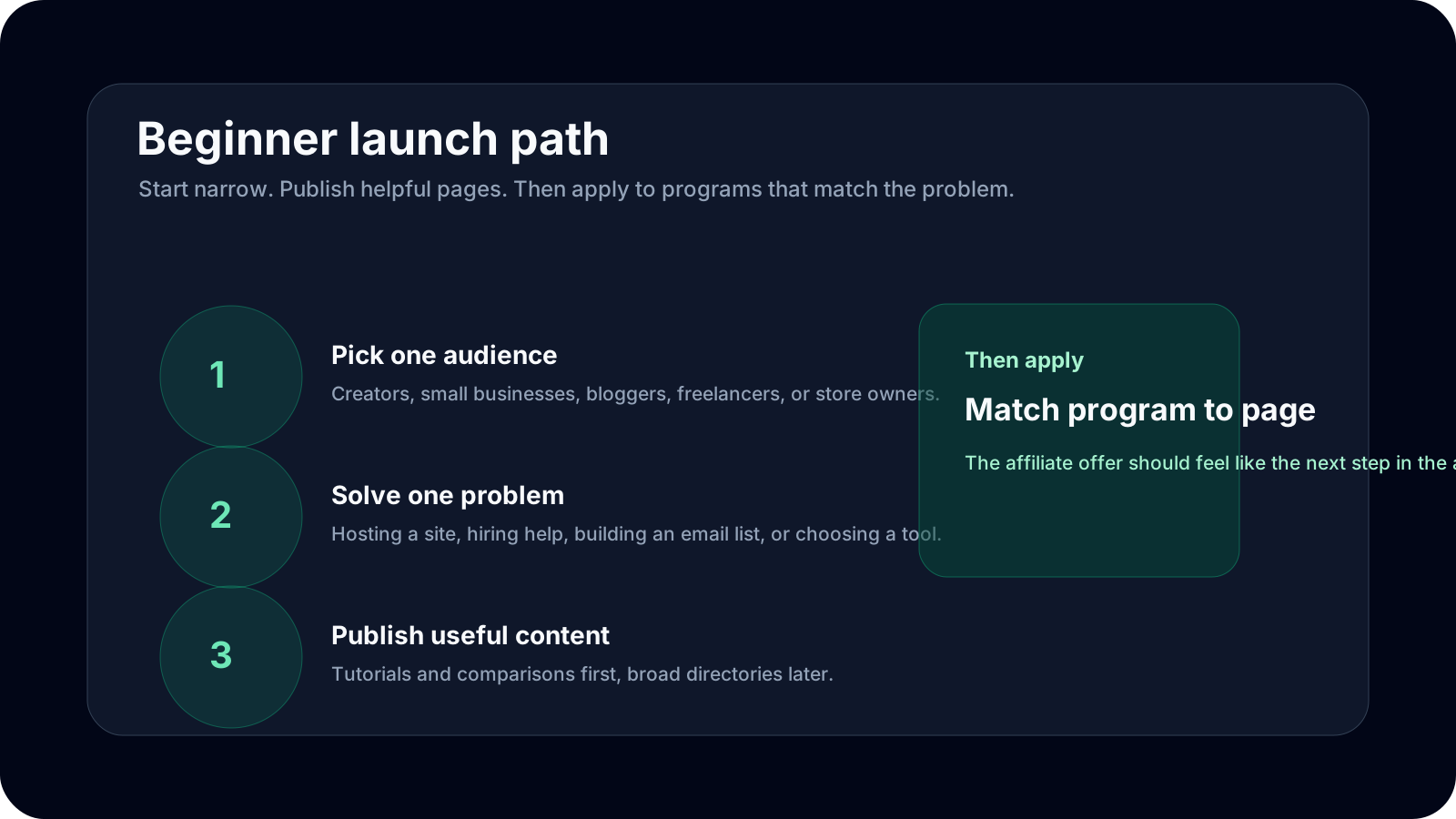
This launch path shows the safest beginner sequence: choose one audience, solve one problem, publish useful content, then apply to programs that match the page intent.
The safest first move
The safest first move is not applying to every program. It is choosing a narrow problem. A website beginner needs hosting. A small business owner may need a freelance designer. A creator may need an email platform. Each of those paths can produce focused content.
Once the problem is clear, the affiliate recommendation feels less random. The program becomes part of a solution, not just a monetization attempt.
What beginners should avoid
Beginners should avoid broad pages that try to promote hosting, SaaS, services, and productivity tools all in one place. Those pages are hard to rank, hard to trust, and hard to convert. A smaller but clearer cluster is usually more useful.
What makes an affiliate program beginner-friendly?+
A beginner-friendly program is easy to explain, has a clear buyer problem, and does not require a complex sales funnel before the first useful piece of content can be published.
Should beginners choose instant approval programs only?+
No. Instant approval is convenient, but audience fit matters more. A manual approval program can still be better if it matches your niche and content plan.
How many programs should a beginner promote at first?+
One to three is usually enough. It is better to build a focused cluster around a few programs than to scatter links across many unrelated offers.