

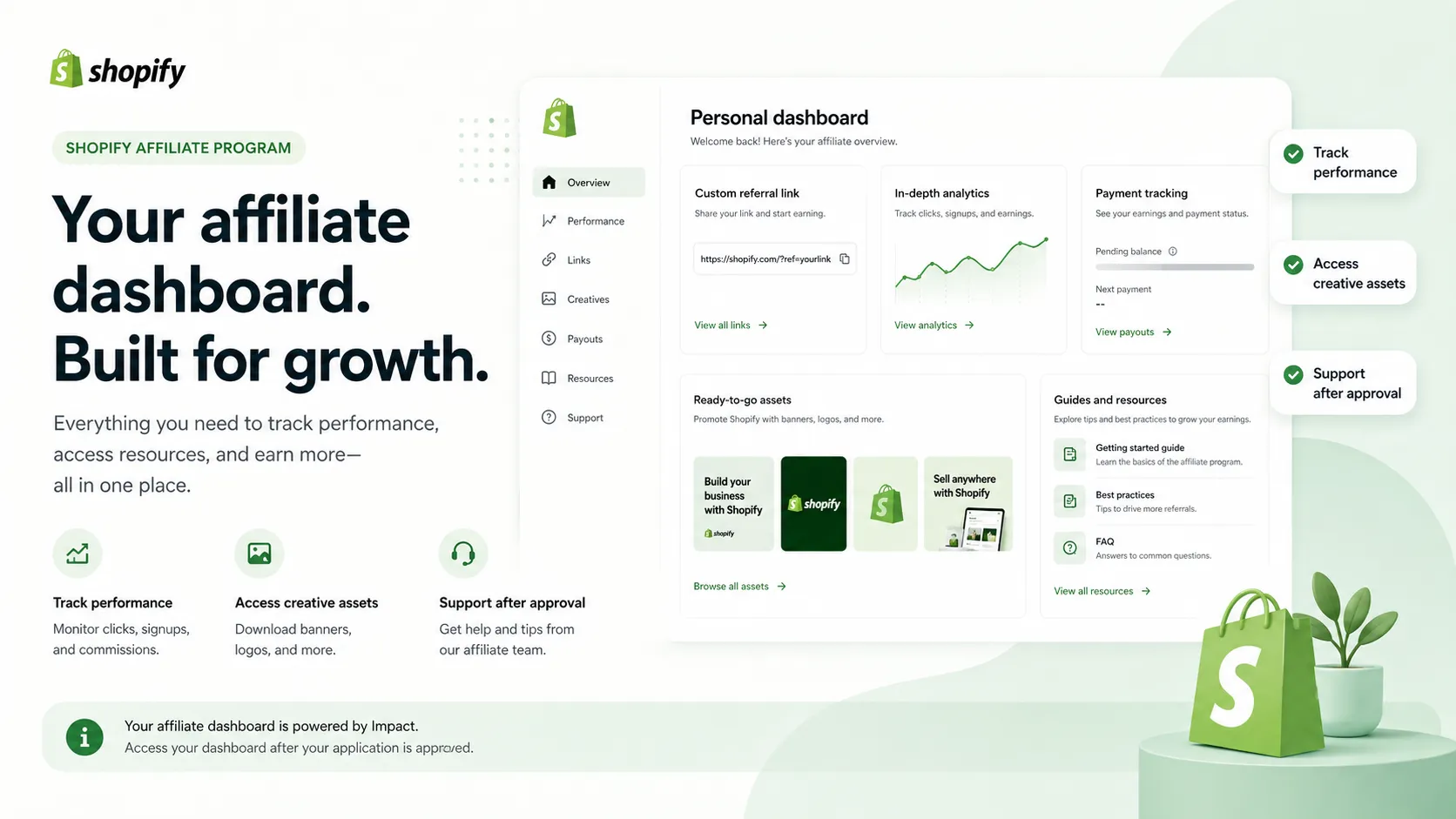
The honest fit: who should promote Shopify
Shopify is easiest to promote when the reader already has a store-shaped problem.
That sounds obvious, but it changes the whole content strategy. A person searching “how to start a candle store online” is in a very different state of mind from someone reading “best online business ideas.” The first reader needs a platform, a payment flow, product pages, maybe shipping, maybe inventory. The second reader is still wandering.
For Shopify, wandering traffic is expensive. It clicks, signs up for trials, then disappears. The affiliate only wins when the referred merchant becomes a paid Shopify customer, so the content needs to do some filtering before the click.
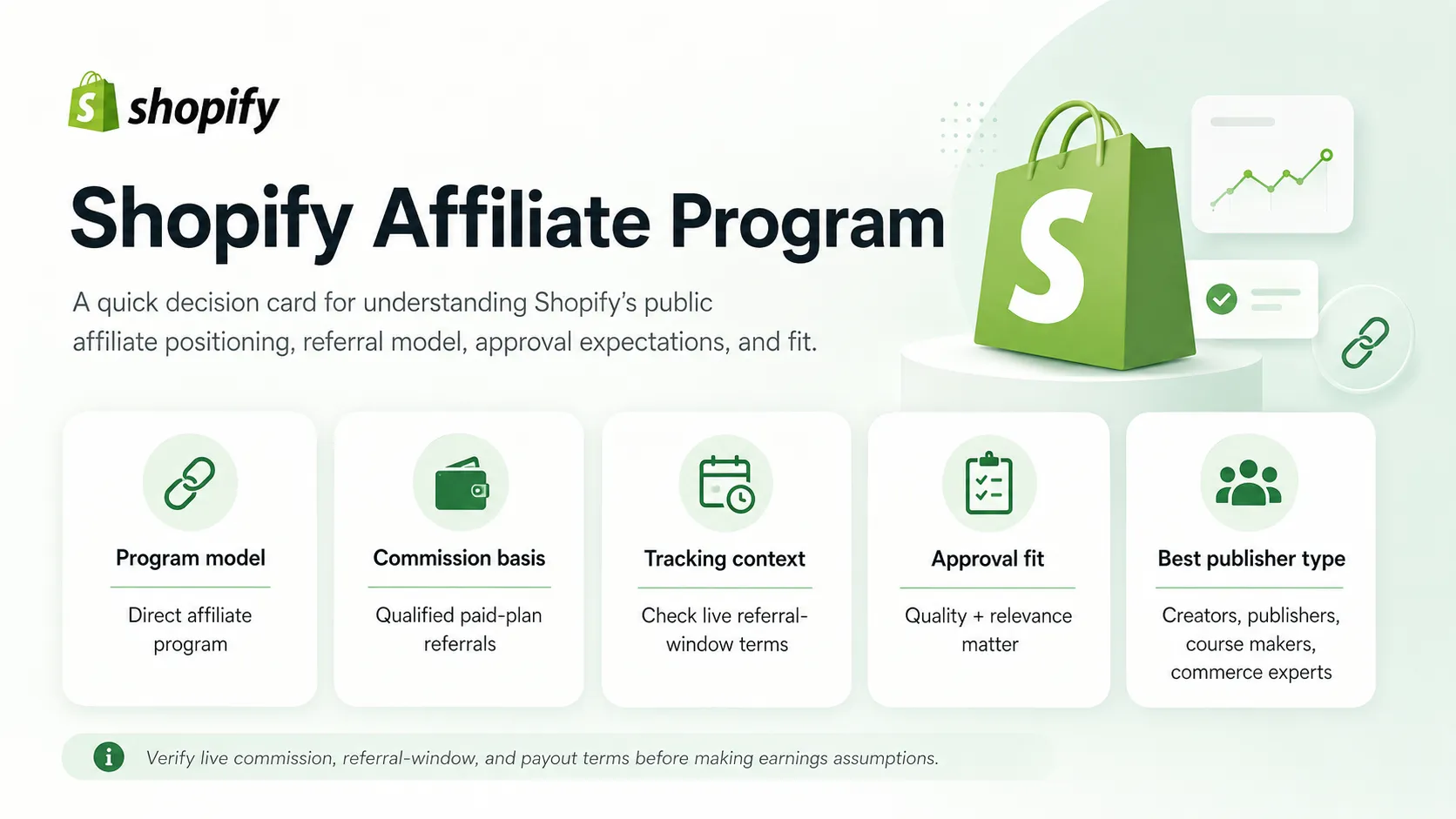
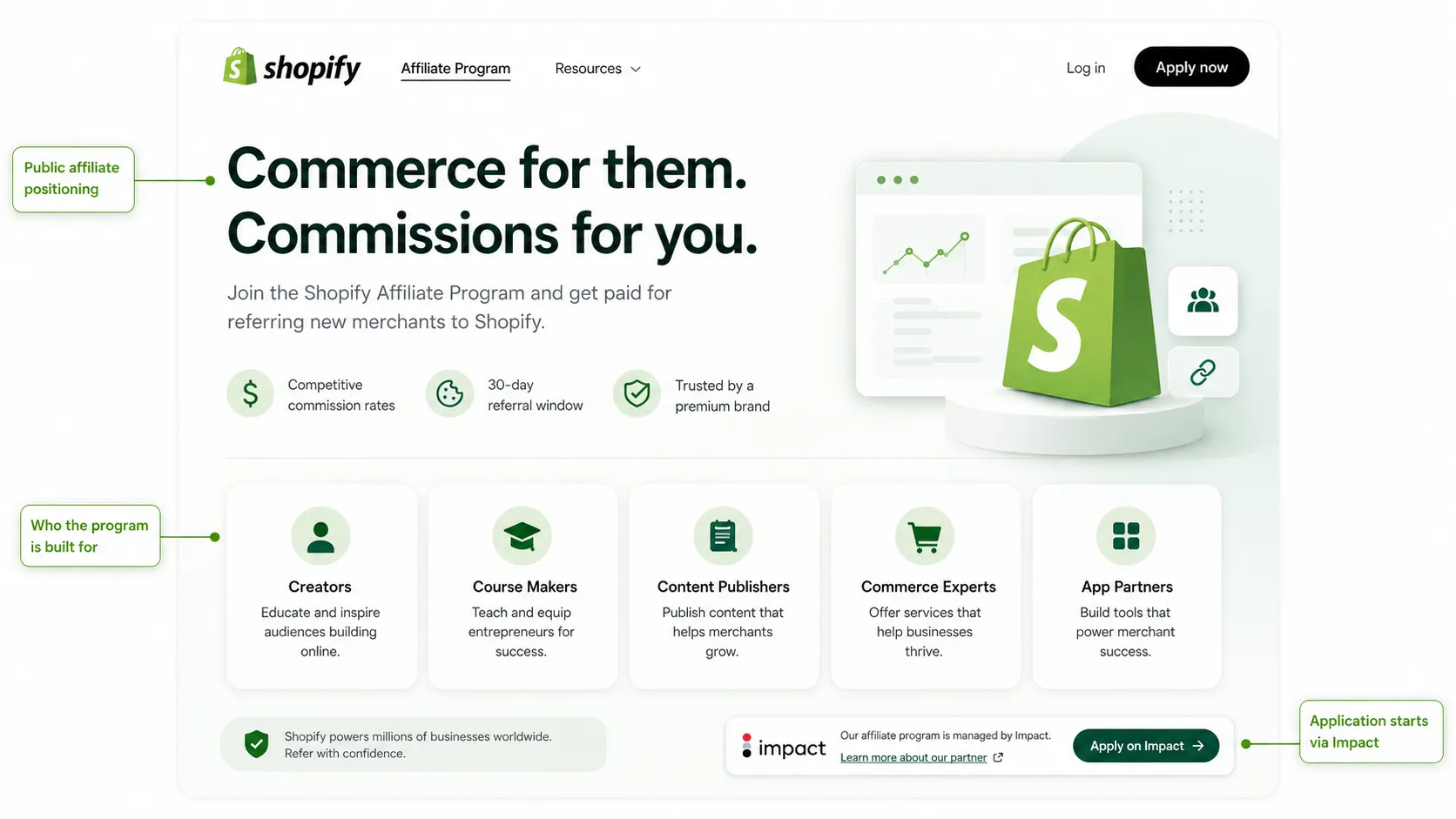
The best publishers for this program usually fall into a few groups:
- ecommerce educators who teach store setup, product research, pricing, fulfillment, and conversion;
- niche business bloggers writing for sellers in fashion, handmade goods, digital products, food, beauty, print-on-demand, or dropshipping;
- YouTube channels that can walk through a real store build rather than only talk about “online business”; and
- newsletters or communities where readers are already launching side businesses or moving from marketplaces to their own storefront.
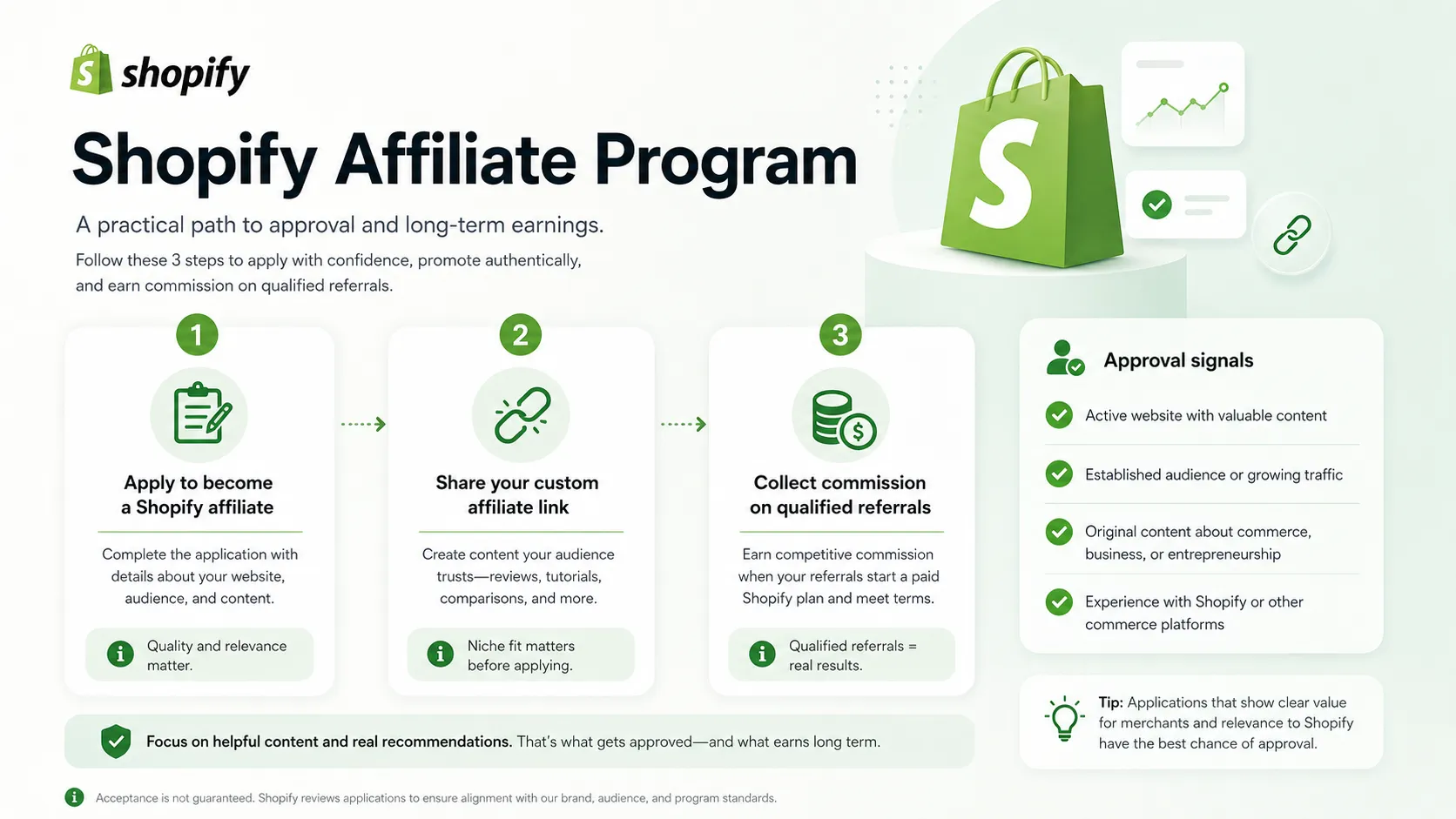
The weaker fit is a broad coupon site, a generic side-hustle blog, or a creator who only has entertainment-style social traffic. Shopify’s affiliate FAQ says it prioritizes quality and relevance, and the ideal affiliate signals are not mysterious: active website, established audience, original commerce or entrepreneurship content, and experience with Shopify or other commerce platforms.
That is why I would not treat Shopify as a volume-first affiliate program. Treat it like a credibility-first program. A smaller site with twenty useful ecommerce articles may be a better applicant than a larger lifestyle site with no commerce depth.
Approval strategy that does not feel fake
Do not apply with a thin “software deals” site and hope the brand name carries you.
Before applying, build a page trail that makes the reviewer’s job easy. They should be able to land on your site and immediately understand why your audience would care about Shopify.
A clean pre-application footprint might look like this:
- one main ecommerce hub page;
- three to five practical guides about starting or improving an online store;
- at least one comparison article, such as Shopify vs Etsy, Shopify vs WooCommerce, or Shopify vs Wix;
- a visible author/profile page, contact page, and affiliate disclosure;
- no copied screenshots, fake income claims, or “guaranteed Shopify success” wording.
You do not need to pretend you are already a massive Shopify expert. You do need to show that you understand the buyer’s problem. For example, a guide about “Shopify for handmade candle sellers” can be stronger than a generic “Shopify review” because it answers questions a real seller has: product variants, bundles, shipping weight, local pickup, email capture, payment methods, and whether Etsy should remain part of the channel mix.
A good approval page should also avoid promising things Shopify itself does not promise. Do not say every reader will get approved for payments. Do not say Shopify is always cheaper than WooCommerce. Do not say Plus is right for every fast-growing brand. Those claims make the content feel careless.
The safer angle is simple: Shopify is a serious commerce platform with a low-friction start, strong checkout, a large app ecosystem, and plan-based tradeoffs. That is useful, believable, and easier to defend.
Commission and payout notes
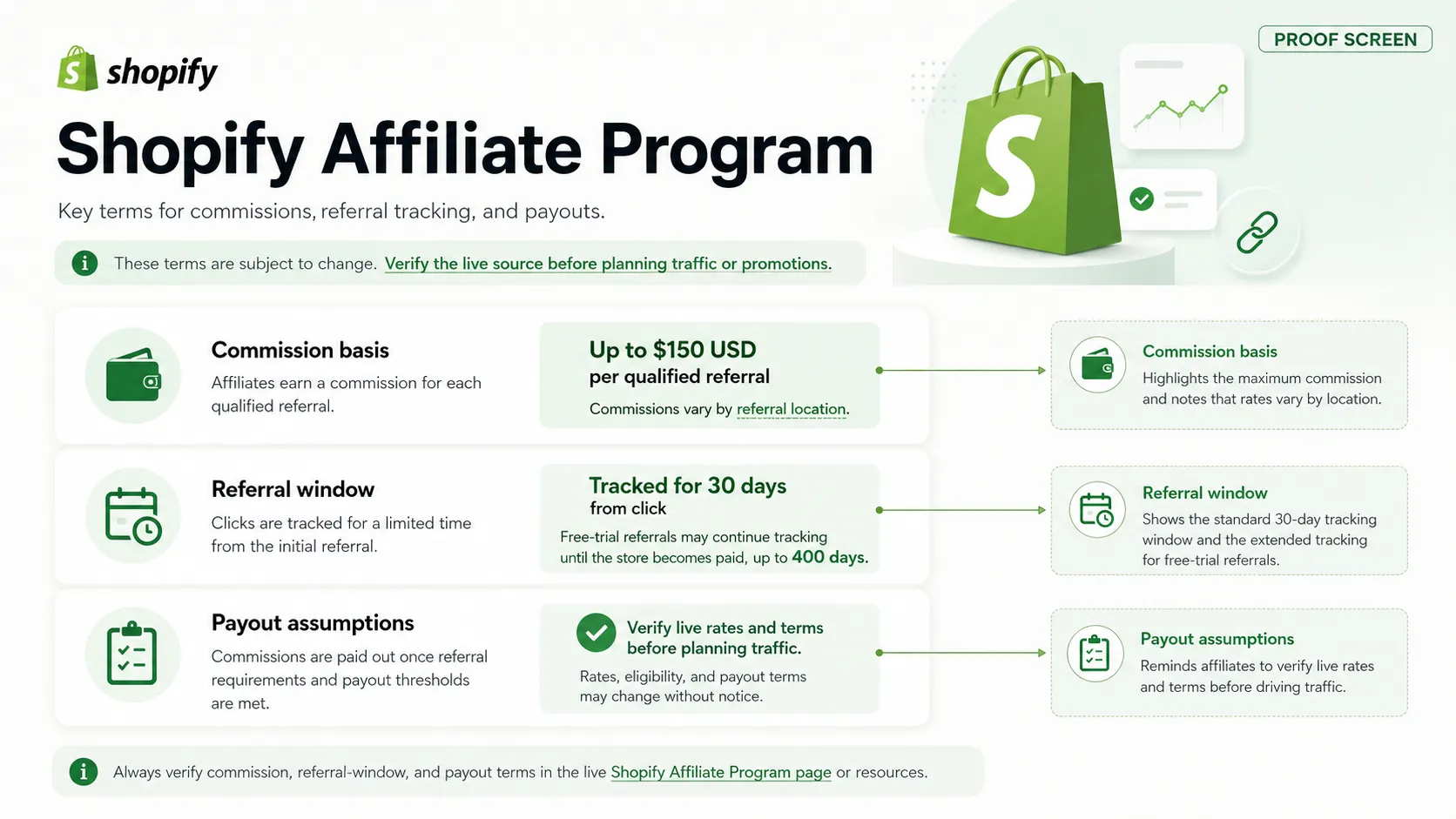
The current public Shopify affiliate page confirms several important pieces: affiliates earn when referred merchants purchase a full-priced Shopify store plan, payments can be made by direct deposit or PayPal in most countries, the minimum withdrawal balance is $10, and Shopify says commissions are issued to the affiliate balance once a month for the prior month’s referrals.
What the public FAQ does not show clearly is the exact commission amount. Several current affiliate references list Shopify as a flat-bounty program, often reported around $150 for standard full-price plan referrals. Your CSV seed also uses that number. I would still avoid writing the page as if the amount is permanently guaranteed unless you verify it after approval.
For public content, safer wording is:
Shopify is commonly reported as a flat-bounty affiliate program for qualified paid merchant referrals. Check the approved dashboard for the live rate, country rules, and any Plus-specific terms before publishing exact earning claims.
That wording is not as punchy as “Earn $150 per sale,” but it is cleaner. It protects the site from publishing outdated commission copy if Shopify changes the amount, country rules, or partner terms.
Referral tracking: the part worth explaining
The tracking rule is more interesting than a normal 30-day cookie.
Shopify says referrals are tracked for 30 days from the click. If the person signs up for a free trial, Shopify also tracks when that store becomes a Paid Trial and Full Price store for up to 400 days.
For affiliates, this changes the content math. You are not only chasing the first click. You are trying to send someone who is likely to keep building the store after the trial starts.
That is why “how to start a store in 10 minutes” content can be noisy. It may drive trial starts, but weak trial starts do not always become paid merchants. A slower guide — one that helps the reader choose a plan, understand costs, set up payments, add products, pick a theme, and plan the first traffic source — may convert fewer clicks but better paid outcomes.
For Shopify, a better affiliate click is often a more educated click.
Content angles that still make sense
Narrow comparisons
Broad Shopify comparisons are crowded. “Shopify vs Wix” and “Shopify vs WooCommerce” have value, but they are hard pages to rank unless the site already has authority.
The better play is to narrow the buyer:
- Shopify vs Etsy for handmade sellers;
- Shopify vs WooCommerce for small product catalogs;
- Shopify vs Squarespace for artists selling prints;
- Shopify vs Amazon for private-label brands;
- Shopify vs BigCommerce for multi-channel inventory.
These pages work because the reader is not asking for a software encyclopedia. They want a decision. Make the recommendation conditional, but not vague. Say which platform fits which use case, where Shopify is overkill, and where it is the cleaner long-term choice.
Pricing and plan-fit guides
Shopify pricing content can convert well because pricing is where doubt shows up.
The safest version is not a stale table copied once and forgotten. Shopify pricing can vary by country, billing term, trial offer, and plan structure. Use the live pricing page as the source of truth, then explain the buyer decision around it.
Good plan-fit topics include:
- when Basic is enough;
- when Grow is worth the jump;
- why Advanced is mostly about operational complexity;
- when Shopify Plus is too early;
- how app costs and third-party transaction fees change the real monthly cost.
This kind of content helps readers avoid the “base price trap.” Shopify’s subscription is only one part of the cost. Themes, apps, payment fees, POS add-ons, email volume, shipping tools, and international selling features can matter more than the headline plan price.
Migration guides
Migration content has strong intent because the reader already knows they need a better setup.
Some examples:
- moving from Etsy to Shopify without losing the marketplace channel;
- moving from WooCommerce to Shopify when maintenance becomes annoying;
- moving from Wix to Shopify for better ecommerce structure;
- moving from Instagram-only selling to a proper storefront.
These articles are useful because they can be honest. Shopify is not always cheaper, and it is not always more flexible than a self-hosted setup. But for many merchants, the simpler hosted operations, checkout, app ecosystem, and support structure are worth the tradeoff.
Store-build tutorials
Tutorials work when they are specific enough to feel real.
“Build a Shopify store” is too broad. “Build a Shopify store for a small candle brand” is better. Now you can talk about scent variants, bundles, shipping zones, product photography, local pickup, gift cards, and email capture.
The tutorial should not rush to the affiliate link. It should help the reader avoid mistakes:
- choosing too many apps before validating the product;
- buying an expensive theme too early;
- ignoring payment setup until launch day;
- forgetting shipping profiles;
- launching without a return policy or contact page;
- assuming traffic will appear just because the store is live.
That kind of guidance earns trust. It also sends Shopify a better-quality referral.
Realistic earning scenarios
Use these as directional examples, not promises.
If the flat bounty is verified at $150 in your approved dashboard, the math might look like this:
Small niche blog
A small ecommerce blog gets 8,000 visits per month. Only a few articles have real Shopify intent. Those pages send 180 affiliate clicks. If 8 people start a trial and 2 become paid merchants, the month is worth about $300 at a $150 bounty.
That is not life-changing, but it is a solid return from a narrow content cluster.
Focused YouTube tutorial channel
A YouTube creator publishes a detailed Shopify setup video for beginners in one niche, such as print-on-demand posters. The video gets 20,000 views over a few months and sends 600 clicks. If 30 viewers start trials and 6 become paid merchants, that is about $900 at the same bounty.
The advantage of YouTube is trust. The viewer can see the workflow. The weakness is that links in descriptions often get lower click-through than a strong SEO article with comparison intent.
Established ecommerce site
A stronger site with 100,000 monthly organic visits may have multiple Shopify-intent pages: comparisons, pricing guides, migration articles, and tutorials. If those pages send 3,000 monthly clicks and 25 readers become paid merchants, that is about $3,750 at a $150 bounty.
But this only works if the traffic is relevant. A broad business site can have more total traffic and still convert worse.
What to avoid when writing Shopify content
The biggest mistake is writing like Shopify is perfect for everyone.
It is not.
A freelancer selling services may not need Shopify. A blogger selling one digital PDF may be better with a simpler checkout. A local restaurant may care more about ordering and delivery workflows. A developer-heavy team may prefer WooCommerce or a headless build. A marketplace-first seller may want to keep Etsy or Amazon as the main demand channel.
Good affiliate content names those cases. It earns more trust, and it also improves conversion because the people who do click are better matched.
Other weak patterns:
- copying Shopify pricing once and never updating it;
- using fake screenshots or old dashboard images;
- saying “no coding required” without explaining where customization still gets technical;
- ignoring third-party payment fees;
- comparing Shopify only against weak alternatives;
- treating Shopify Plus as an upsell for tiny stores;
- promising income outcomes from launching a store.
A Shopify article should feel like it was written by someone who has seen beginners get stuck. Not someone repeating the homepage.
Suggested internal linking for this program
If this program becomes a real hub on your site, I would not leave it as a single page. Shopify can support a small cluster by itself.
Build around these supporting pages:
- Shopify affiliate program overview;
- Shopify pricing explained for new merchants;
- Shopify vs Etsy;
- Shopify vs WooCommerce;
- Shopify vs Wix;
- Shopify POS guide for small retailers;
- best Shopify alternatives;
- how to start a niche Shopify store;
- Shopify migration checklist.
The program page can then stay focused on the affiliate opportunity, while the cluster catches different buyer intents.
Final take
Shopify is worth including as a flagship sample because it teaches the right lesson about affiliate data: a famous brand is not enough.
The real opportunity is not the name. It is the match between audience, intent, content angle, and referral quality.
For a thin affiliate site, Shopify will feel hard. For a focused commerce publisher, it can become one of the most useful anchor programs in the database. Just keep the claims clean, verify the live commission after approval, and build content for merchants who are actually close to opening or improving a store.