Recurring vs One-Time Affiliate Commissions: Which Is Better?
A practical guide to comparing recurring affiliate commissions against one-time payouts, with notes on churn, conversion intent, content effort, and payout risk.
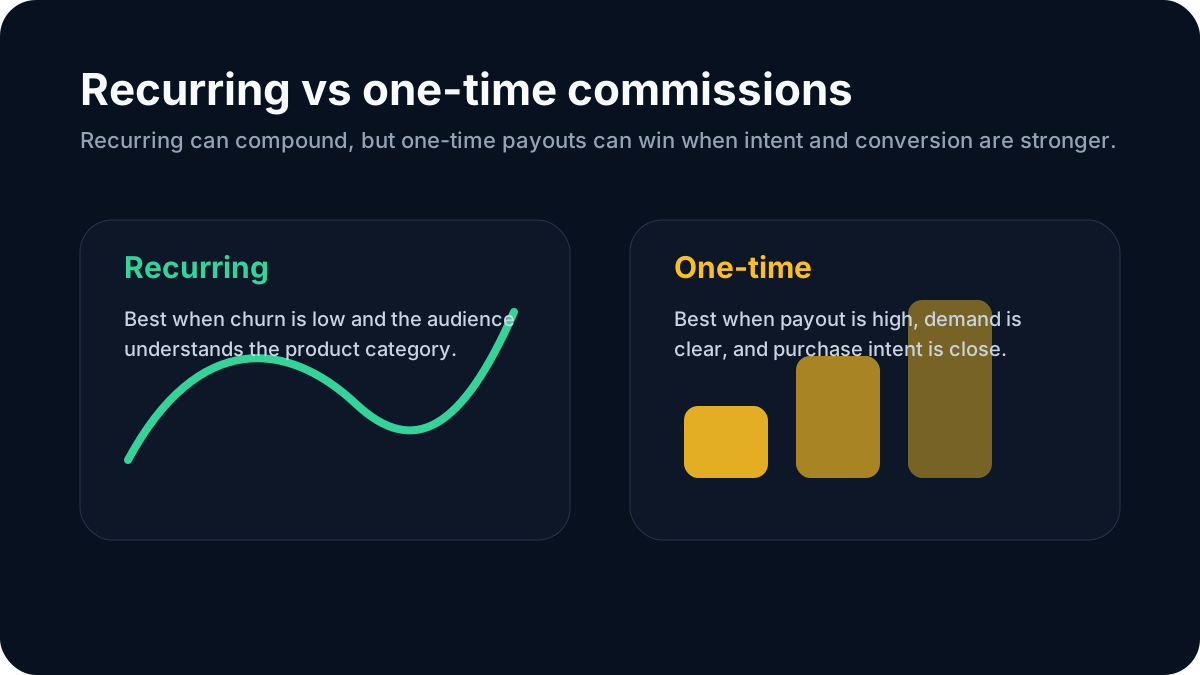
- Recurring commissions can compound, but only if retention and tracking terms hold up.
- One-time payouts can be better when buyer intent is strong and the payout is high enough.
- The right model depends on audience fit, conversion path, churn, and content depth.
Recurring affiliate commissions sound like the dream model: one referral, repeated payouts. Sometimes that is true. But recurring is not automatically better than one-time commission, and treating it that way can push you into the wrong programs.
The better question is not “recurring or one-time?” It is: which payout model matches the product, the reader, and the kind of content you can create?
Why recurring commissions are attractive
Recurring programs are attractive because they can compound. If a customer keeps paying monthly or yearly, the affiliate may continue earning according to the program terms. This is common in SaaS, creator tools, email marketing platforms, subscriptions, and some software services.
Recurring works especially well when the product becomes part of the customer’s workflow. Email tools, store platforms, analytics tools, and business software can stay in place for months or years if they solve an ongoing problem.
But recurring commission depends on retention. If users cancel quickly, the theoretical lifetime value may not show up in your actual affiliate account.
Why one-time payouts still matter
One-time programs can be very strong when buyer intent is high. Hosting, ecommerce setup, financial services, courses, enterprise software, and some marketplace offers can pay meaningful commissions upfront.
The advantage is clarity. You usually know what you earn after a qualified purchase or lead. You do not need to wait months to see whether retention works.
A one-time payout can also match content that captures urgent demand. For example, a reader searching for a setup guide may need a solution now. If the program converts well and pays fairly, recurring is not required for the campaign to make sense.
The hidden risk of recurring programs
Recurring programs have several risks publishers often overlook:
- The brand may change recurring terms later.
- Customers may churn before meaningful revenue accumulates.
- Some programs cap recurring payouts after a period.
- Attribution rules may be narrower than the headline sounds.
- Approval may be selective if the brand protects its partner program.
That does not make recurring bad. It means you should verify the terms and avoid building your entire strategy around a single promise.
Match payout model to content effort
Recurring programs usually need deeper content. You may need tutorials, comparison pages, plan explainers, workflow guides, and ongoing updates. That effort can be worth it if the product is central to your niche.
One-time programs can work with a narrower content path when the problem is immediate. But they still need trust. A page that only repeats the payout or discount angle will not build much authority.
A practical decision rule
Choose recurring when:
- The product solves an ongoing workflow problem.
- Your audience understands the category.
- You can create educational content that supports retention.
- Program terms are clear enough to trust.
Choose one-time when:
- The buyer need is immediate.
- The payout is strong compared with the content effort.
- The product is not naturally subscription-driven.
- The conversion path is simple and close to the reader’s intent.
The best portfolio can include both. A recurring program can be your long-term engine, while one-time programs can monetize high-intent pages where the buyer wants a specific solution.
Final thought
Recurring is powerful when the product sticks. One-time is powerful when the purchase intent is strong. The right choice is the one that lets you help the reader make a clearer decision while giving you a payout model that matches the work you put in.

Steven Doan
Founder & Affiliate Program Researcher
Steven Doan researches affiliate programs, payout models, approval paths, and publisher fit for AffiBest.
Frequently asked questions
Are recurring affiliate programs always better? +
No. Recurring programs can be excellent, but they require a product people keep using. If churn is high or the buyer journey is weak, a strong one-time payout can outperform a recurring offer.
What kind of content works best for recurring programs? +
Recurring programs usually work best with educational content, workflows, setup guides, comparisons, and use-case pages because the reader needs to understand why the product is worth keeping.
When should I prefer a one-time affiliate payout? +
Prefer one-time payouts when the purchase has strong intent, the payout is meaningful, and the product does not naturally create long-term subscription value for your audience.