How to Get Approved for Affiliate Programs
A practical checklist for improving affiliate program approval odds with a clear niche, relevant content examples, honest traffic sources, and a credible promotion plan.
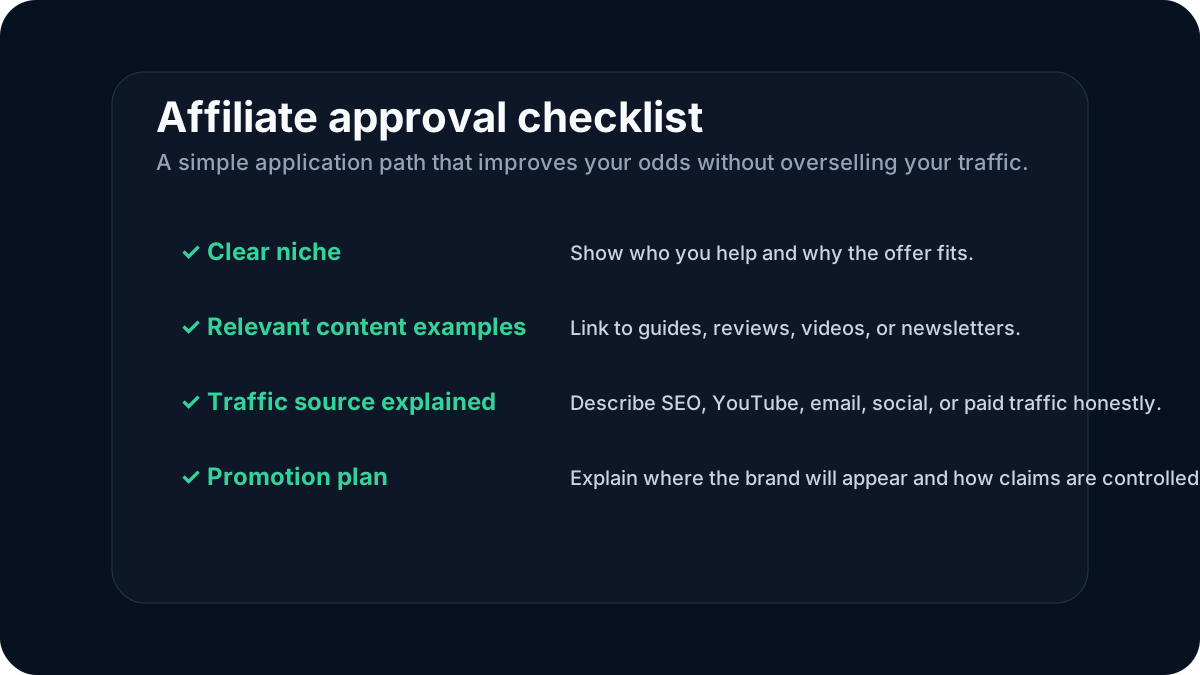
- Brands want to understand your audience, traffic source, and promotion plan.
- Relevant content examples are more persuasive than inflated traffic claims.
- A selective program is easier to approach when your site already looks focused and brand-safe.
Affiliate approval is not only about traffic size. Many programs want to know whether your site is relevant, your claims are safe, and your audience could realistically become customers.
That is good news for smaller publishers. You may not have massive traffic yet, but you can still look credible if your niche, content, and promotion plan are clear.
Make your niche obvious
A reviewer should understand your site within a few seconds. If your homepage covers productivity, parenting, crypto, cooking, travel, and software all at once, a brand may not know where their product fits.
You do not need a huge site. You need a focused one. A small site about ecommerce setup is easier to approve for store platforms than a general site with unrelated posts.
Publish relevant content before applying
Apply after you have at least a few pages that prove your audience fit. These do not need to be perfect, but they should show a real editorial direction.
Useful examples include:
- A beginner guide in the product category.
- A comparison or alternatives page.
- A tutorial showing how a buyer would solve a problem.
- A collection of tools for a specific audience.
When the application asks how you will promote the program, you can point to those pages instead of making vague promises.
Explain your traffic honestly
Do not inflate traffic. Brands and networks can often see whether your claims are plausible. A better approach is to describe your current and planned channels clearly.
For example:
We publish SEO-focused tutorials for early ecommerce founders. The program would appear in setup guides, comparison pages, and a resource page for store launch tools.
That answer is more useful than saying “we can send many leads” without evidence.
Show how you will control claims
Affiliate managers care about brand safety. They do not want misleading discount claims, unsupported income promises, or spammy promotion.
Your application is stronger if you explain that you will use educational content, update public terms, disclose affiliate links, and avoid false urgency. This tells the brand you are not trying to push low-quality traffic.
Prepare a simple application note
You can reuse this structure:
- Who your audience is.
- What content you publish.
- Why the program fits that audience.
- Where the offer will appear.
- How you will disclose and keep information updated.
Keep it short. The goal is not to sound corporate. The goal is to look deliberate.
If you are rejected
Do not treat rejection as the end. Some programs are selective. Others are closed, paused, or focused on partners with a specific type of traffic.
Improve your content base, apply to easier adjacent programs, and come back later. A rejection from one program does not mean the niche is bad. It may only mean your site is not ready for that specific brand yet.
Final thought
Affiliate approval is a trust test. A focused site with relevant content and an honest promotion plan can look stronger than a large but unfocused site. Make it easy for the program manager to say yes.

Steven Doan
Founder & Affiliate Program Researcher
Steven Doan researches affiliate programs, payout models, approval paths, and publisher fit for AffiBest.
Frequently asked questions
Can I get approved with a new website? +
Sometimes, especially for beginner-friendly programs. Your odds improve when the site has a clear niche, a few useful articles, an honest traffic plan, and no misleading or thin content.
Should I mention traffic numbers in an application? +
Mention them if they are real and relevant. If traffic is small, focus on audience fit, content quality, and your promotion plan instead of exaggerating numbers.
What should I do if I get rejected? +
Treat rejection as feedback. Improve niche clarity, publish better supporting content, and reapply later if the program allows it. You can also start with adjacent programs that have lighter approval requirements.