
- All
- Deals
- Coupons
- Sales
- Expired







Frase: Product Directory & Resource Hub (2026)
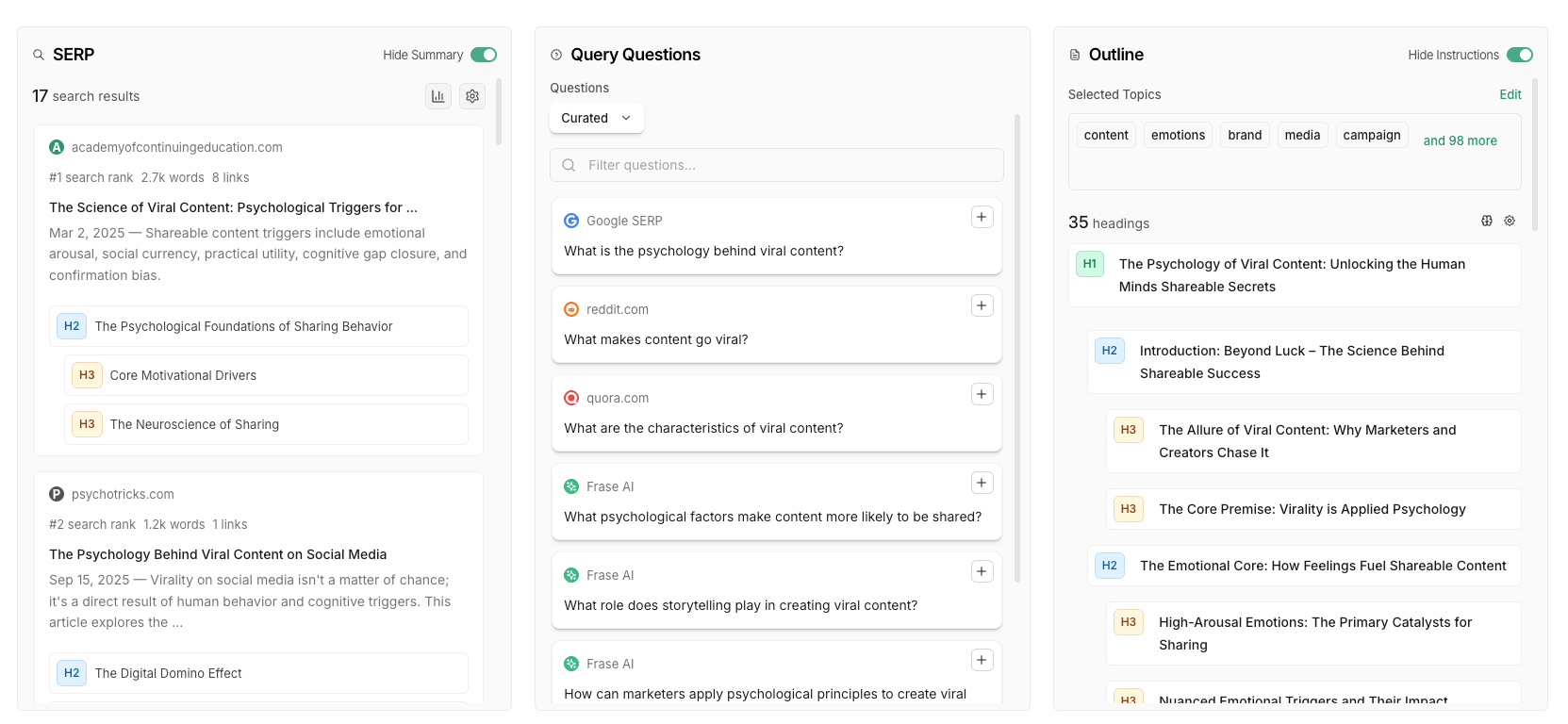
Frase is often described as an “AI SEO tool,” but that label hides what matters. In real workflows, it’s closer to a research-and-briefing engine with an optimization layer—useful when you publish consistently and want fewer bottlenecks, less blank-page time, and clearer drafts.
One observed reality: most teams don’t need “more content.” They need a calmer system that ships content without endless rewrites. Tools like Frase can help—but only if they match how you actually work each week.
Start here: choose your path
This is the part most product pages skip: routing. Pick the track that matches your situation so you don’t end up reading the wrong page (or trialing the wrong tool).
If you’re new to Frase
If you’re comparing tools right now
If you’re on a trial and need a workflow
What Frase actually does (plain English)
Frase is most useful when you treat it as a workflow system for SEO content. In practice, it supports four jobs:
- SERP research: understand what ranking pages cover (topics, questions, structure).
- Briefs and outlines: turn that research into a writer-ready plan.
- Optimization and QA: identify gaps and tighten coverage without guessing.
- AI visibility tracking (for some teams): monitor prompts and competitor gaps across AI platforms.
My stance: Frase is worth paying attention to when it reduces friction every week. If your publishing rhythm is inconsistent, it’s easy for any tool to become shelfware.

Who Frase is best for (and who should skip)
Frase is usually a strong fit if you…
- Publish consistently (weekly or more) and want repeatable briefs and outlines.
- Manage writers and need a common definition of “what this page must cover.”
- Refresh older content and want a systematic way to spot gaps and update opportunities.
- Prefer workflow improvements over “AI writing hype.”
You should probably skip (or delay) if you…
- Publish rarely and don’t have a weekly workflow to plug it into.
- Only want fast drafts and don’t care about briefs, SERP research, or QA.
- Already have an established stack and Frase would overlap without replacing anything.
- Know your team chases scores—because that’s how good writing slowly turns into “optimized mush.”
Here’s the candid caution: any optimization tool can nudge you toward writing for checklists. The teams that win are the ones that keep editorial judgment in charge.

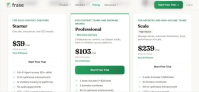
Pricing and value logic (how to think about it)
Rather than staring at plan names, use this simple model:
Value ≈ publishing frequency × workflow repeatability.
- If you publish and refresh often, tools like Frase compound time saved.
- If you publish occasionally, you’ll likely feel the cost more than the value.
Pricing also changes. So instead of hard-coding numbers here, use the dedicated guide when you’re choosing a tier: Frase pricing in 2026: which plan is actually worth it?

Comparisons: where Frase fits vs other tools
These aren’t “feature battles.” They’re workflow choices. If you’re shortlisting, pick the comparison that matches what you’re actually deciding.
- Editor-first optimization vs briefing-first workflow: Frase vs Surfer SEO
- Value vs premium editorial precision: Frase vs Clearscope
- Practical small-team workflow vs enterprise-style depth: Frase vs MarketMuse
- SEO workflow vs drafting-first speed: Frase vs Writesonic
If none of those feel like your situation, don’t force it. Use the fit-based shortlist instead: best Frase alternatives by workflow.
Tutorials and workflows (for new users and trial runs)
If you’re actively testing Frase, don’t try to learn everything. Run one real keyword through a repeatable loop and judge results honestly.
A simple 48–72 hour test plan
- Build one brief for a keyword you’ll publish this month.
- Draft one section (AI optional), then edit for clarity and specificity.
- Optimize with restraint: fix missing sections first, then stop early if clarity drops.
- Refresh one older page to see whether Frase helps maintenance, not just creation.
Use these two pages as your “do this next” guides:
GEO and AI visibility tracking: useful, or premature?
Frase includes AI visibility tracking and GEO-related workflows. For some teams, that’s a real edge. For others, it’s noise.
You probably need this now if:
- Your category is researched heavily inside AI answers (software, services, “best tools” prompts).
- You can actually act on insights (you have editorial bandwidth).
- You have competitors worth tracking and prompts worth owning.
It’s probably premature if:
- You don’t publish consistently or maintain content.
- You can’t tie prompts to real business outcomes.
- You’re still fixing fundamentals (intent, structure, quality, trust).
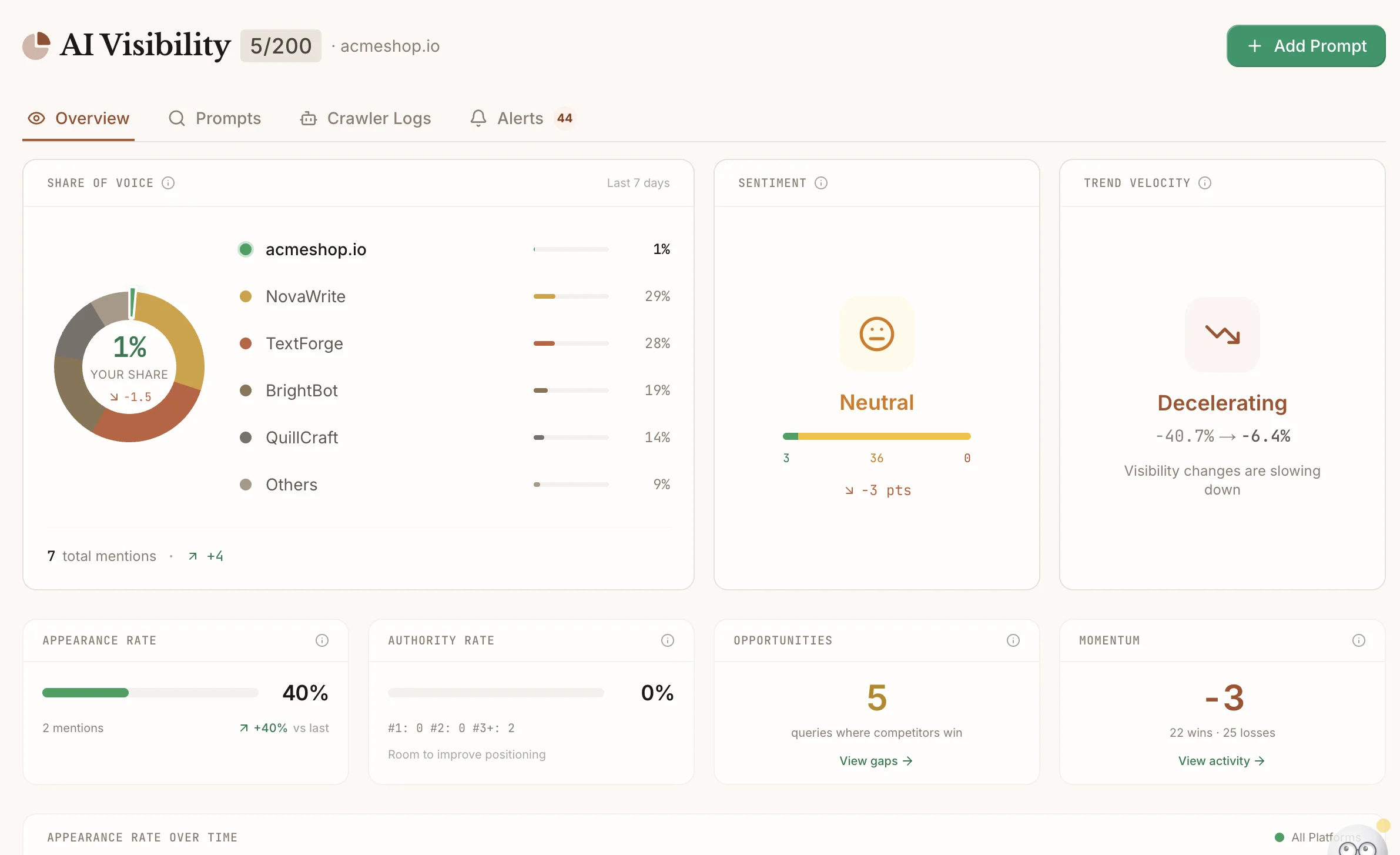

If this is relevant to your team, start with the deeper use-case evaluation: Can Frase help with GEO and AI visibility tracking?
Resource hub: the 12 supporting pages (grouped by intent)
This is the “hub” part. Use it like a menu—pick what matches your decision stage.
Core decision pages
- Frase review: is it worth it for SEO content teams in 2026?
- Frase pricing in 2026: which plan is actually worth it?
- Frase coupon code & free trial: the best way to save in 2026
Alternatives and broader category research
- Best Frase alternatives in 2026: better fits for different workflows
- 7 best SEO content optimization tools in 2026 (including Frase)
Head-to-head comparisons
Tutorials and use cases
FAQ
Is Frase an AI writer?
It can help with drafting, but the more durable value is research, briefs, and optimization guidance. If you treat it like a publish button, you’ll be disappointed.
Will Frase replace my other SEO tools?
Usually not entirely. Most teams still use other tools for technical SEO, links, and analytics. Frase tends to live in the content workflow layer.
What’s the safest way to evaluate Frase?
Run one real keyword through a brief → draft → optimize loop, then refresh one older page. The question isn’t “can it generate text?” It’s “did it reduce friction and improve the final page?”
Should I compare Frase before starting a trial?
If your shortlist includes Surfer, yes—because that’s usually a workflow choice (editor-first vs briefing-first). Start here: Frase vs Surfer SEO.
Next step
If Frase matches your workflow—meaning you publish consistently and you want a repeatable brief + optimization loop—the lowest-pressure next move is to try it on one real keyword and see if it removes friction.
If you’d rather confirm plan fit first (and avoid overbuying), go to Frase pricing. If you’re still deciding overall, start with the Frase review.
A softer human verdict: the right tool is the one your team still uses in 90 days because it made work easier—not because it promised a new kind of SEO.