 admin
admin 
I used to “optimize” by sprinkling keywords into headings like seasoning. It felt productive. It also produced a weird kind of writing: technically on-topic, emotionally empty, and suspiciously similar to everything else on page one.
Then you notice what the best pages actually do. They don’t just repeat the keyword. They answer the full set of questions that come with the query—definitions, constraints, comparisons, steps, edge cases. They sound like someone who understands what the reader is trying to do.
This is what NeuronWriter semantic SEO is useful for when you use it well: turning SERP patterns into a content optimization workflow that improves relevance without turning your article into a robot. This guide shows a repeatable method using SERP analysis, NeuronWriter NLP terms, and entity-based SEO coverage—plus the mistakes that make content feel over-optimized.
Quick links
- NeuronWriter review (fit vs not-fit)
- NeuronWriter free trial guide (7-day decision plan)
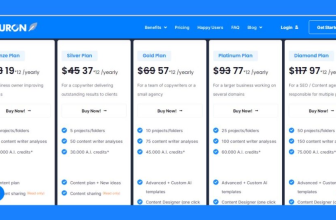
- NeuronWriter pricing (plan gating + features)
- Go to NeuronWriter
NeuronWriter semantic SEO (what it really means)
“Semantic SEO” can sound like marketing language until you reduce it to something practical:
- Keyword SEO asks: “Did we include the target phrase?”
- Semantic SEO asks: “Did we cover the concepts, entities, and questions the reader expects for this query?”
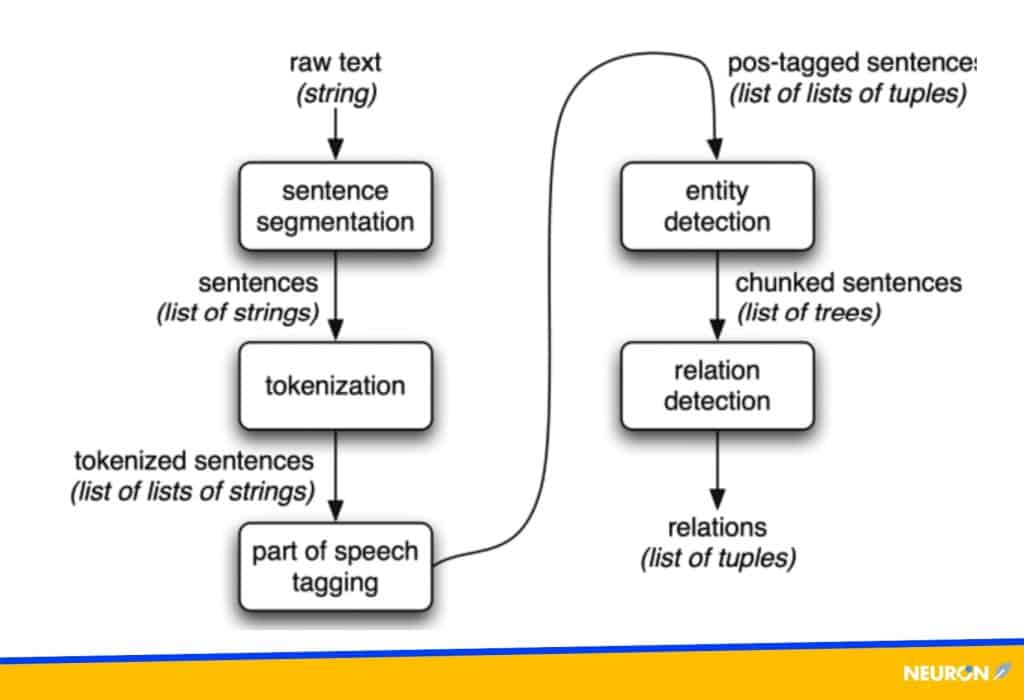
NeuronWriter supports that second question by analyzing competitor pages and extracting meaningful coverage signals—like NLP terms and entity concepts—so you can see what top results repeatedly include. The point is not to imitate competitors line-by-line. The point is to stop missing obvious sections that the SERP has quietly standardized.
If you want two definitions that keep you grounded (and keep your writing honest):
- Search engine optimization (Wikipedia) — a broad, stable baseline for what “SEO” actually includes.
- Natural language processing (Wikipedia) — helpful context for why modern search systems care about meaning, not just matching.
Important caution: NeuronWriter’s score and checklist can be useful, but they are not proof of Google’s preferences, and they are not a ranking guarantee. Treat them as internal editing support—like a second set of eyes that’s good at pattern detection, not at understanding your audience.
Step-by-step NeuronWriter semantic SEO workflow
This workflow is deliberately boring. Boring is repeatable. Repeatable is what builds results over time.
Step 0: Pick a query with a real decision behind it
Semantic SEO gets messy when you optimize the wrong page type. Before you open NeuronWriter, answer this:
- Who is the reader?
- What are they trying to decide or do?
- What would “success” look like after they read your page?
If you can’t describe the decision, your content will drift into generic coverage, and no tool will save it. NeuronWriter can help you fill gaps. It can’t choose your angle.
Step 1: Run SERP analysis and map “required sections”
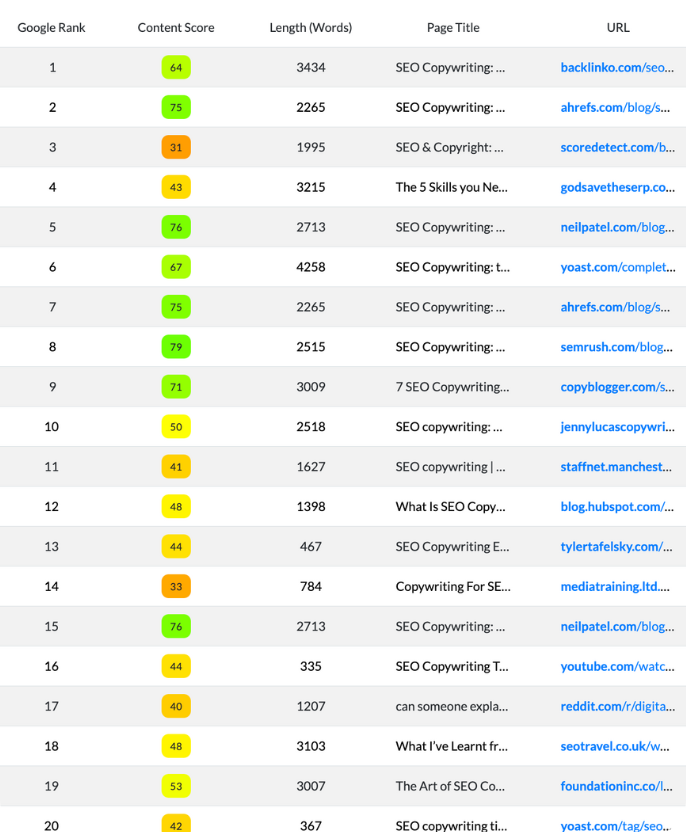
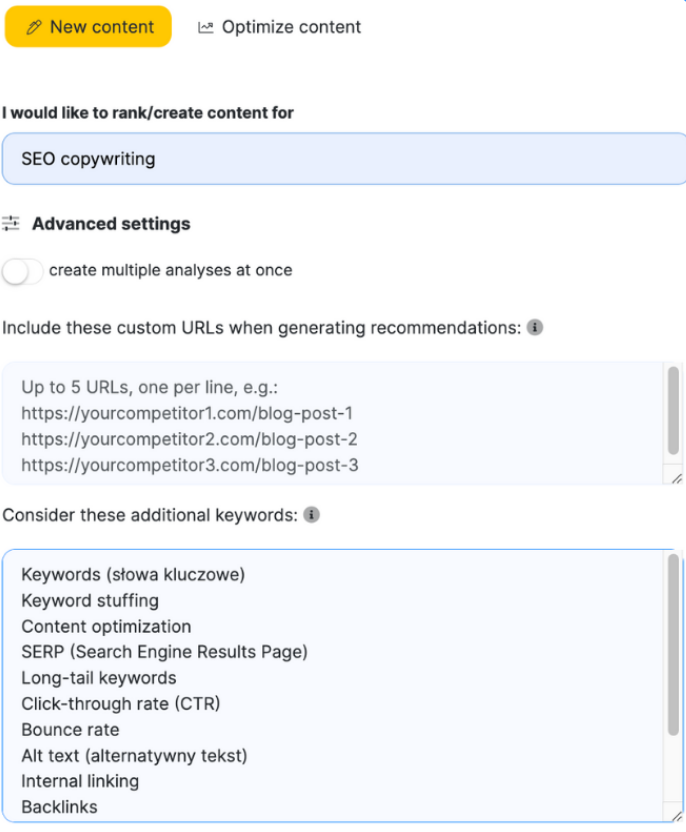
Start with SERP patterns, not with word count. In NeuronWriter, create your query and look for the repeated structure across competitors:
- Definitions (“what is…”, “how it works”)
- Use cases (“when to use”, “who it’s for”)
- Comparisons (“X vs Y”, alternatives, pros/cons)
- Constraints (pricing, limits, setup requirements, risks)
- FAQs (common follow-ups that show up in multiple top pages)
Write down a “required sections list” (usually 6–10 sections). This is the skeleton you’ll draft against. It stops you from writing a beautiful intro and then realizing you forgot the part people actually needed.
Step 2: Choose NLP terms and entities like an editor, not a collector
This is where most people break the workflow. They treat NeuronWriter NLP terms as a checklist of words to insert. That’s not semantic SEO—that’s stuffing with better vocabulary.
A better approach is to treat terms/entities as prompts for what needs explaining. For each suggested term, ask:
- Does this term represent a concept the reader needs to understand?
- Can I explain it naturally in my own voice?
- Does it belong in the main flow—or in a small definition/FAQ box?
If a term fails those questions, skip it. Your goal is relevance and clarity, not term accumulation.
Step 3: Draft the page like a human first
Drafting “for the tool” is how you end up with content that feels assembled. Instead:
- Write the clearest explanation you can for each section.
- Add one concrete example per major section (even a small one).
- Keep the voice consistent—don’t switch into textbook mode when you start optimizing.
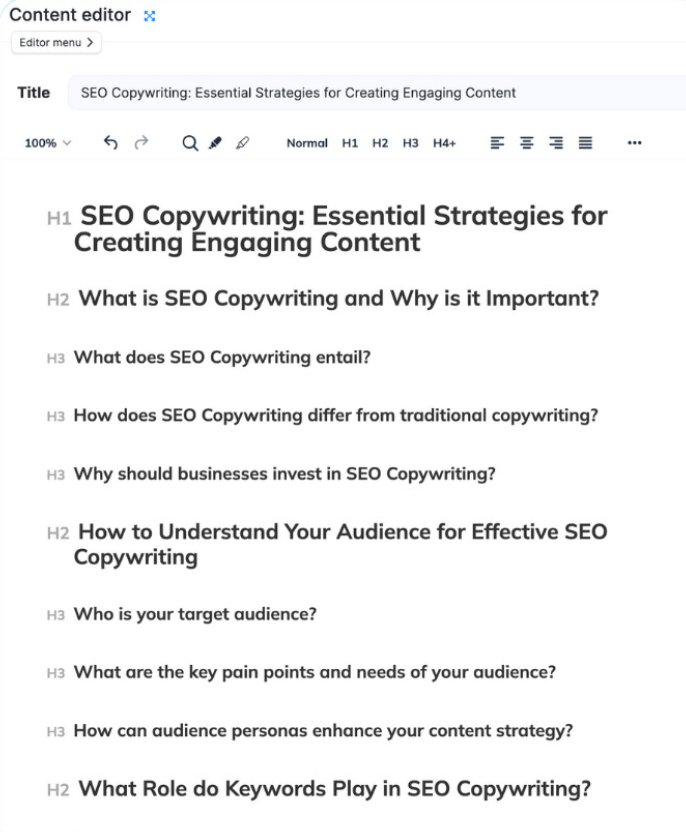
Then—and only then—use the editor suggestions to check what you missed.
Step 4: Optimize with intent (coverage pass, not “score pass”)
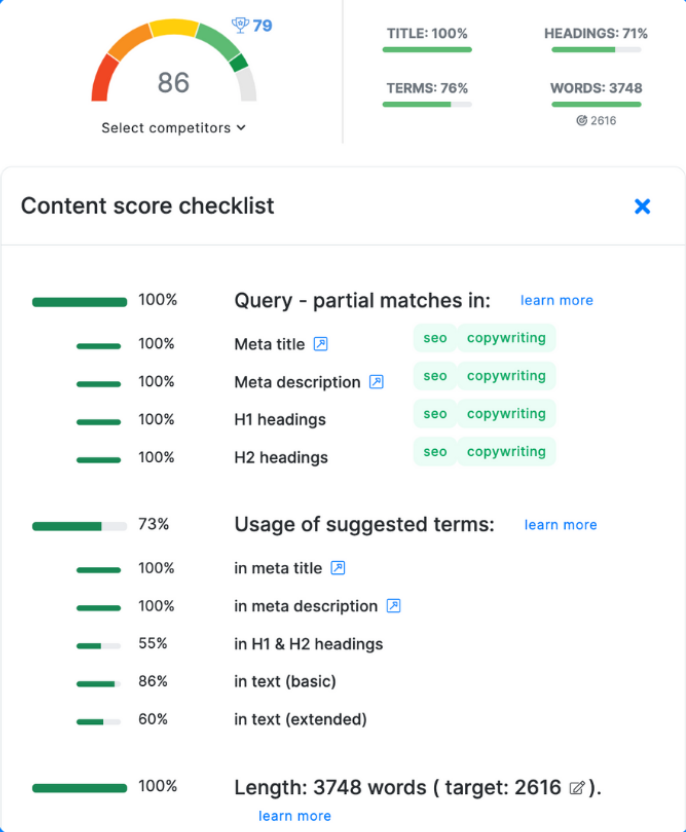
Now you run the classic loop: review suggestions → close gaps → re-check coverage. Keep it focused:
- Fix missing sections first. A missing “how it works” section hurts more than missing a handful of terms.
- Improve definitions. Many pages lose because they assume knowledge the reader doesn’t have.
- Add comparisons when the SERP signals them. If competitors all answer “X vs Y,” your page looks incomplete without it.
- Use FAQs as a cleanup tool. They’re a natural place for leftover but useful concepts.
Step 5: Cut bloat (the step most “SEO content” skips)
Semantic SEO is not “add more.” It’s “answer better.” After you close gaps, do one final pass that removes fluff:
- Delete repeated explanations.
- Combine sections that say the same thing.
- Replace generic paragraphs with one specific example.
- Shorten intros that delay the answer.
If your content gets longer but less clear, you’re paying an opportunity cost: longer time to edit, longer time to maintain, and a higher chance the reader bounces.
Step 6: Publish—and save the workflow for updates
The quiet win of semantic SEO is content updating. Once you have a page structure aligned with SERP expectations, future refreshes get easier. You can re-run analysis later, spot new patterns, and update only what changed—without rewriting the entire page.
If you want a practical way to test this workflow before paying, use the NeuronWriter free trial guide. It’s built to prove whether you’ll actually use this method weekly.
Mistakes that make content feel robotic
If you’ve ever read an “SEO optimized” post and felt your attention slide off it, you already know these mistakes. NeuronWriter can help you avoid them—if you’re honest with yourself while you optimize.

Mistake 1: Stuffing terms because the tool suggested them
When writers treat NLP terms as mandatory inserts, the sentence rhythm breaks. Definitions become awkward. The page starts to read like it was built from parts.
Fix: only add terms when they improve clarity. If you can’t explain it naturally, it doesn’t belong in the main flow.
Mistake 2: Chasing score instead of finishing the reader’s job
Score is a proxy for coverage, not a goal. A high-scoring page can still be wrong for the intent (too academic, too salesy, too long, too thin).
Fix: define the reader’s job at the top of your doc. Then optimize toward completing that job.
Mistake 3: Ignoring SERP intent shifts
Sometimes the SERP changes. A query that used to want a tutorial now wants a comparison. A query that used to want “what is” now wants “best options.”
Fix: rerun SERP analysis periodically and watch for changes in headings patterns, not just keywords.
Mistake 4: Using AI to fill space instead of adding value
AI drafts can speed up output, but they also tempt you into “more paragraphs” instead of “better explanation.” Readers feel that immediately.
Fix: keep AI as a draft helper, then rewrite sections with real examples, constraints, and decisions.
Mistake 5: Forgetting entity-based coverage
Entity-based SEO isn’t a trick; it’s a reminder: real topics have real components—people, products, systems, steps, tools, constraints. If your page never names the entities that matter for the query, it often reads vague.
Fix: add one “specifics” section: tools, examples, definitions, and named concepts. That’s usually where the page starts to feel credible.
A simple “coverage rubric” you can reuse
If you want something you can apply to every NeuronWriter project—without overthinking—use this rubric. It’s intentionally short.
1) Intent coverage
- Does the page answer what the query is asking within the first 10–15 seconds of reading?
- Does it match the page type the SERP is rewarding (guide, comparison, product page, tutorial)?
2) Section coverage
- Does it include the 6–10 “required sections” competitors consistently cover?
- Does it add something better (example, clarity, constraint) instead of copying structure?
3) Term/entity coverage
- Are key concepts explained in plain language?
- Are entities used naturally (not dumped in a list)?
4) Readability + trust
- Does it read like a person who understands the topic?
- Does it avoid inflated claims, vague advice, and filler paragraphs?
If you want a broader product fit view, read the NeuronWriter review. If you want to prove the workflow quickly before paying, follow the NeuronWriter free trial plan.