
 admin
admin 
If you’re comparing Frase vs Writesonic in 2026, you’re probably not comparing two “similar AI tools.” You’re comparing two different jobs:
- Frase is typically used to speed up SEO research, briefing, and optimization so writers and editors ship more consistently.
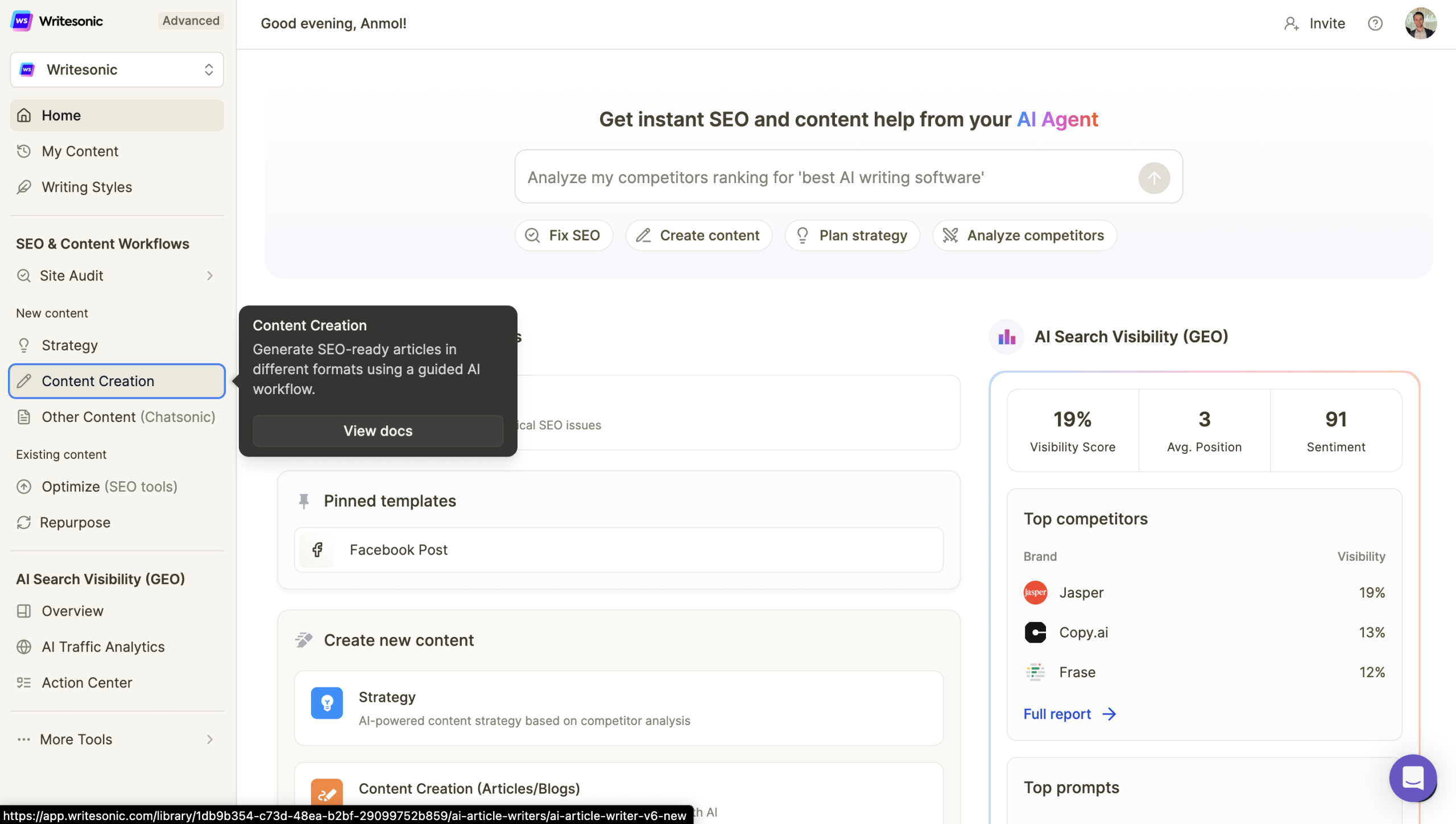
- Writesonic is typically used to speed up drafting and content production (often across many formats), with strategy and QA happening elsewhere.
That’s the expectation shift that makes this decision easier: you’re not choosing a brand. You’re choosing what part of the workflow you want software to push hardest.
One observed reality: “faster drafts” only helps if your editing workload doesn’t double afterward. The hidden cost of drafting-first tools is almost always QA.
Quick verdict: who should choose Frase vs Writesonic?
Choose Frase if you need a repeatable SEO content workflow
- Your bottleneck is research + briefs (SERP patterns, questions, structure) more than producing words.
- You want a system for “keyword → brief → outline → optimize” that writers can follow.
- You refresh content and want a structured way to find gaps and update opportunities.
- You care about consistency across multiple writers and pages, not just generating drafts quickly.
Choose Writesonic if you mainly need faster draft output
- Your bottleneck is volume: you need drafts for blogs, landing pages, ads, emails, and social content on a tight cadence.
- You’re comfortable editing heavily and you already have a QA process (facts, examples, brand tone).
- You want a drafting-first tool that’s oriented around “create content” more than “brief and optimize a SERP-driven article.”
Choose neither (for now) if your process is the real issue
- You don’t have a consistent publishing rhythm, so any subscription is likely to become shelfware.
- You don’t have a clear editorial bar (facts, usefulness, angle), and you’re hoping AI will create one.
- You already pay for overlapping tools and nothing is being replaced.
My stance: if you’re buying a tool to avoid thinking, you’ll be disappointed. If you’re buying a tool to reduce friction in a workflow you already run weekly, you’ll usually feel value quickly.
The core workflow difference: briefing-first vs drafting-first
Here’s a practical way to compare them: what happens before the first paragraph is written?
- With Frase, the workflow often starts with SERP research and a brief. The tool is trying to answer: what should this page cover and how should it be structured?
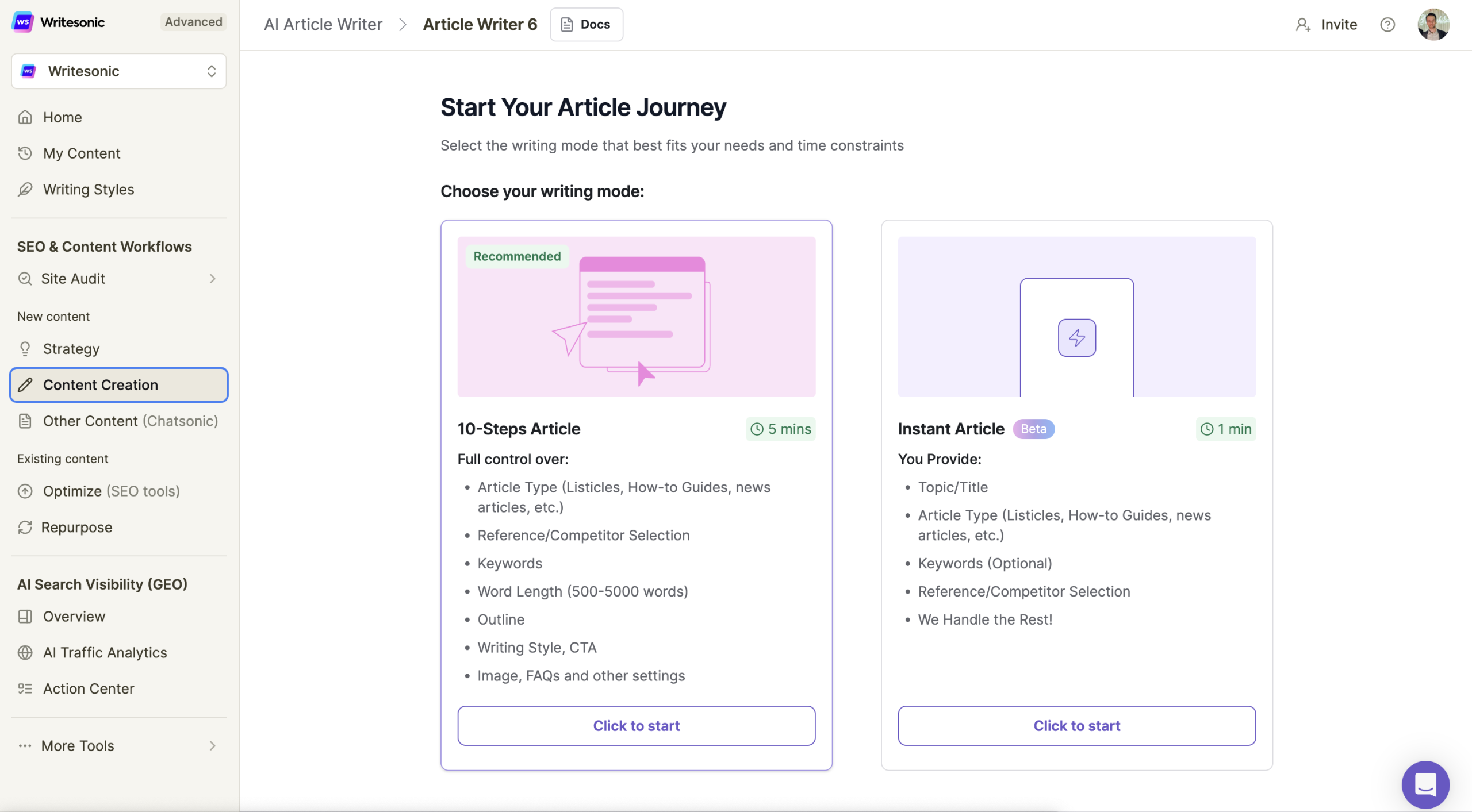
- With Writesonic, the workflow often starts with draft generation. The tool is trying to answer: how can we get a usable first draft quickly?

What each tool is best at (and what it’s not)
Frase is best at: SERP research, content briefs, and optimization guidance
Frase is typically strongest for teams that want to standardize how content gets planned and improved:
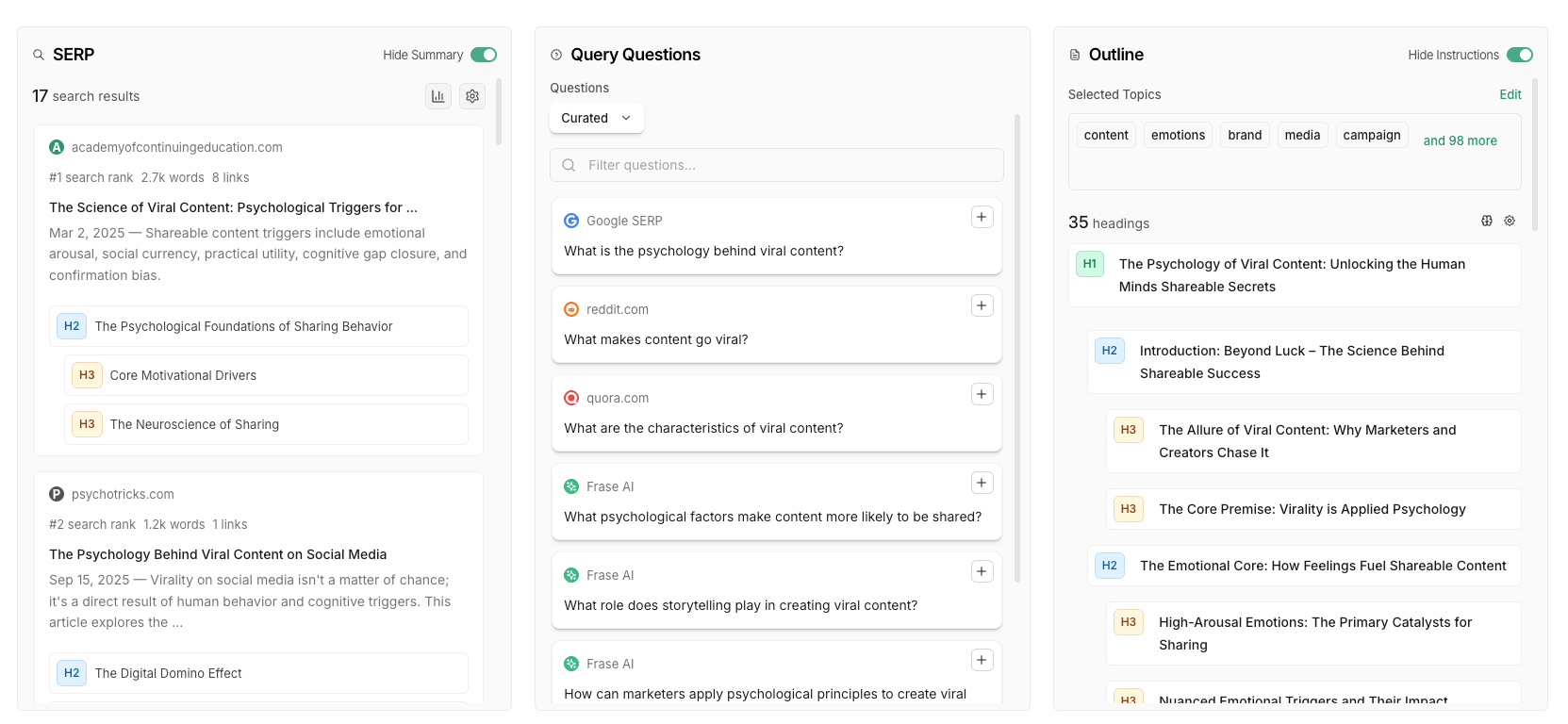
- SERP-driven outlining: faster path from keyword to a structure that matches intent.
- Writer-ready briefs: questions to answer, sections to include, and coverage expectations.
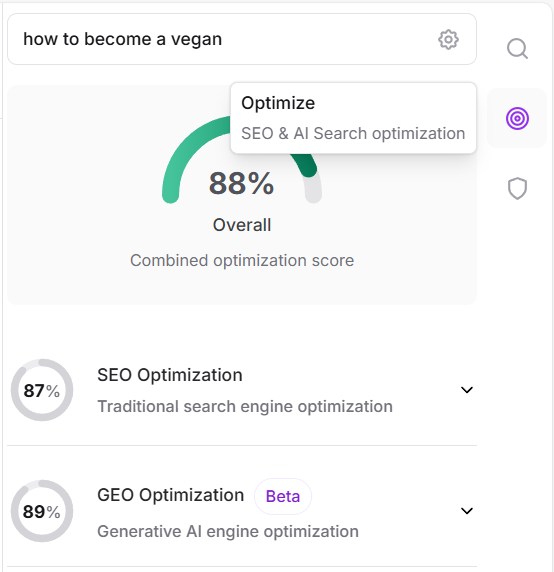
- Optimization as QA: a practical way to catch missing subtopics without turning the page into a keyword dump.
Writesonic is best at: producing drafts and variations fast
Writesonic tends to shine when speed and format variety matter and you can handle editorial control:
- Fast first drafts for blog posts and marketing content.
- Multi-format creation (ads, emails, landing pages, social).
- Guided workflows for article generation (depending on the mode you choose).
Here’s the candid caution: drafting-first tools can produce content that reads fine while being thin, repetitive, or loosely accurate. If your team doesn’t have an editing pass that checks facts and adds real examples, speed becomes a liability.
Optimization vs drafting: what “quality” looks like in each workflow
People often describe this choice as “SEO tool vs AI writer,” but the more accurate framing is:
- Frase is oriented toward coverage quality (did we answer what the SERP expects, clearly and completely?).
- Writesonic is oriented toward production throughput (can we generate drafts quickly and iterate?).

Scenario-based recommendations (the part most comparisons skip)
Scenario A: solo affiliate or blogger publishing SEO posts weekly
Frase usually wins if your time sink is SERP research, outlining, and making sure posts are complete without writing fluff.
Writesonic can win if your time sink is drafting and you already have a strong editing pass to add product details, testing notes, comparisons, and real-world constraints.
Decision rule: if you’re often stuck before the outline is clear, choose Frase. If you’re stuck because you can’t get drafts produced, choose Writesonic.
Scenario B: small content team with writers + an editor
Frase usually wins when you need consistent briefs and a shared definition of “what this page should include.”
Writesonic can be useful when you need draft volume, but only if your editor capacity is strong enough to shape outputs and keep quality high.
Decision rule: if your pain is misalignment (writers missing key sections), pick Frase. If your pain is sheer production volume and you can edit aggressively, Writesonic can help.
Scenario C: marketing team producing many formats (not just SEO posts)
Writesonic usually wins if the job is to produce a lot of variations across channels and you need speed.
Frase can still matter if SEO content is a core acquisition channel and you need consistent briefs and optimization discipline.
Two short videos if you want to see the tools in motion
If you’re still unsure, run this 45-minute test (and stop guessing)
- Pick one real SEO keyword you plan to publish this month.
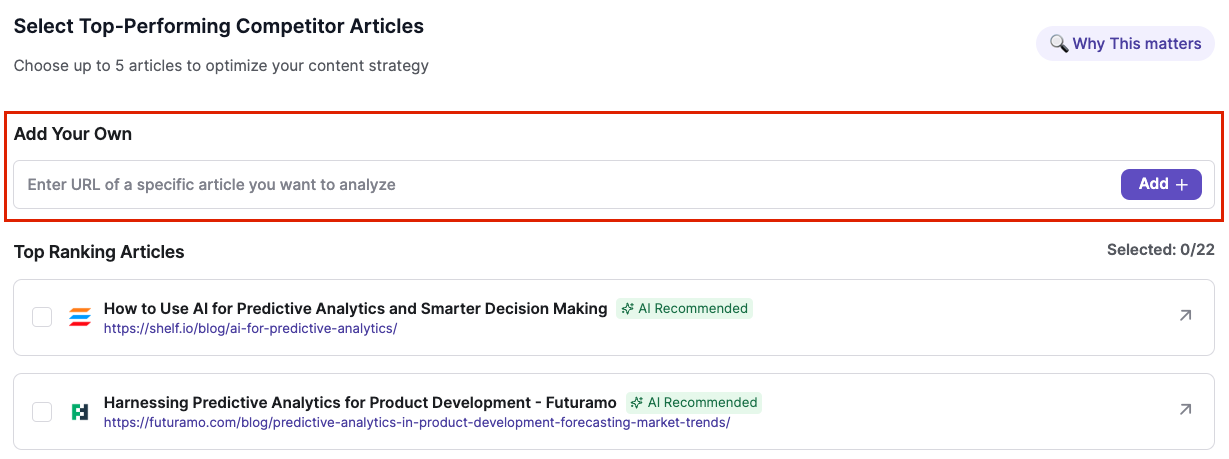
- In Frase: build a brief and outline. Ask: would a writer produce a strong first draft from this without extra strategist help?
- In Writesonic: generate a draft using a guided workflow. Ask: how much editing is needed to make it accurate, specific, and genuinely useful?
- Decide what the tool replaces. If it replaces nothing, you’re likely buying overlap.
That last step is the one most teams avoid. But it’s the cleanest way to prevent subscription creep.
Internal resources to help you decide faster
- If you want the full context on Frase—strengths, limits, and who should skip it—start with this Frase review for SEO content teams.
- If you want a practical workflow walkthrough, use how to use Frase for SEO content.
- If neither tool feels like a clean fit, shortlist by category using best Frase alternatives by workflow.
Final verdict
Pick Frase if you want a workflow tool that makes SEO content planning and optimization more consistent—especially if you publish regularly and briefs are a bottleneck.
Pick Writesonic if you primarily need faster draft production across formats and you have the editorial capacity to verify, sharpen, and add real substance.
A softer human verdict: the best tool is the one that makes your team calmer. If it increases rewriting, arguments, or “score-chasing,” it’s not helping—no matter how fast it generates.
Next step
If you’re leaning toward Frase for SEO workflow support, the practical next move is to match the plan to your publishing rhythm and collaboration needs.