
 admin
admin 
If you’re reading a Frase review in 2026, you’re probably trying to answer a very normal question: Is this actually going to help my content workflow, or is it another tool I’ll stop opening after two weeks?
That’s the right question. Most content teams don’t need more features. They need fewer bottlenecks: faster research, clearer briefs, less back-and-forth, and an optimization layer that improves pages without turning them into “keyword soup.”
One observed reality right now: a lot of SEO teams are juggling research, briefs, outlines, writers, editors, optimization scores, and now the extra pressure of “AI search visibility” conversations—often with the same headcount as two years ago. A tool only earns its subscription if it reduces friction repeatedly.
Quick verdict: who Frase is for (and who should skip it)
Here’s the honest sorting hat. If you only read one section, read this. – source: Youtube
Frase is usually a strong fit if you…
- Publish consistently (weekly or more) and need a repeatable research → brief → optimization workflow.
- Create content briefs for yourself or other writers and want to cut SERP research time without making briefs shallow.
- Update and refresh older pages and want a structured way to identify gaps against current SERPs.
- Run lean content ops (solo, freelancer, small team) and need one tool to cover “brief + optimize” without a complex stack.
You should probably skip Frase (or delay buying) if you…
- Publish rarely and don’t have a consistent workflow to plug it into.
- Only want fast AI drafts (not briefs, research, or optimization). There are simpler drafting-first tools for that job.
- Already have a mature stack (and team adoption is hard) where Frase would mostly overlap rather than replace anything.
- Tend to chase scores and need tight editorial judgment—because score-chasing can quietly wreck content quality.
My stance: Frase is worth considering when it becomes part of a repeatable publishing system. If you treat it like a magic button, it’ll disappoint you—and it should.
Frase review: what it actually does (in plain English)
Frase sits in the space between “SEO research” and “content production.” Depending on how you use it, it functions as:
- A SERP research assistant that helps you understand what top-ranking pages cover (topics, questions, subheads, entities).
- A content brief and outline builder that turns that SERP understanding into a writer-friendly plan.
- A content optimization layer that highlights gaps and suggests coverage improvements while you write or edit.
- An AI-assisted drafting option (useful for structure and first passes, but not a substitute for real expertise).
If you’ve seen older “Frase.io review” write-ups that focus on it as an AI writer, the more useful framing is this: Frase is best when it helps you research and structure content better—and then optimize it with restraint.
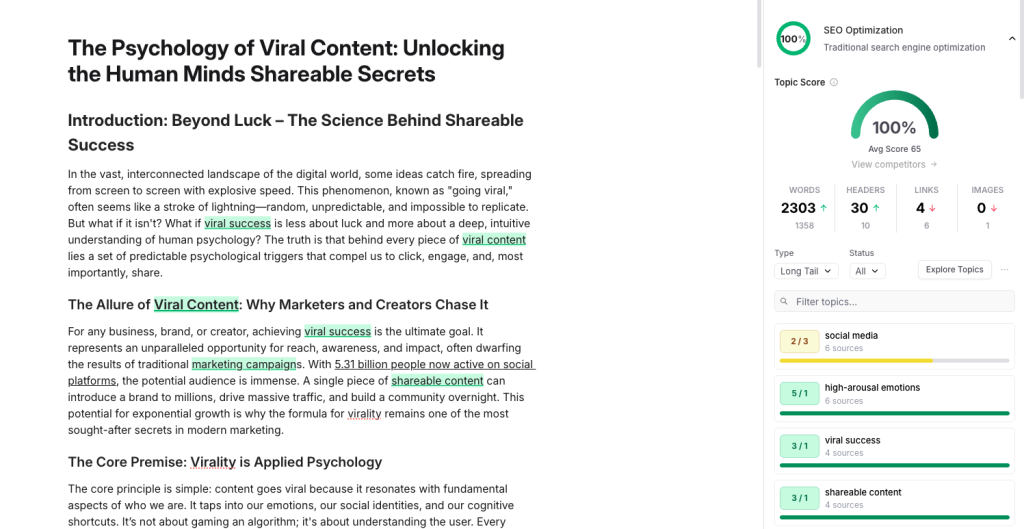
The workflow Frase fits best (keyword → brief → draft → optimize)
Most teams get value from Frase when they treat it as a workflow tool, not a feature buffet. A practical loop looks like this:
1) Start with a keyword that has a real content intent
Frase won’t save a bad input. If the SERP is dominated by product pages or forums and you’re planning a long guide, the tool can’t “optimize” your way past a mismatch. Your first job is aligning the page type with the query intent.
2) Use SERP research to understand the baseline
This is where Frase earns its keep: it helps you see what competing pages commonly include—topics, questions, and patterns—so you’re not outlining from a blank page. The narrative turn for many people is realizing the tool is less about “writing for you” and more about removing research friction.
3) Build a brief that a writer can actually follow
A usable brief isn’t just headings. It should include:
- the target reader and job-to-be-done
- the angle (what you’ll do differently or better)
- section-by-section intent (what each section must accomplish)
- must-answer questions and “don’t miss this” coverage points
- constraints (what to avoid, what not to promise, what requires verification)
If you want a beginner-friendly walkthrough of the flow, see how to use Frase for SEO content.
4) Draft (with or without AI), then edit like a human
AI drafting can help with structure and speed, but it will still need real editing. The risk in 2026 isn’t that AI can’t write—it’s that it can write something that sounds fine while being thin, repetitive, or loosely accurate. A tool can accelerate writing; it can’t guarantee judgment.
5) Optimize with restraint
This is a candid caution worth saying out loud: optimization tools are easiest to misuse when you turn their metrics into the goal. Topic coverage is a helpful checklist. It’s not a substitute for clarity, originality, or usefulness.
Frase pros and cons (the ones that matter in real work)
Pros
- Faster briefing and outlining: Great for teams that publish often and need consistent briefs across writers.
- Cleaner “coverage awareness” while editing: Useful for catching missing subtopics, FAQs, or definitions that SERPs expect.
- Good for refresh workflows: Helps you approach updates systematically instead of guessing what to add.
- Reduces context switching: One place to research, outline, and optimize tends to beat juggling tabs and docs.
Cons
- Score-chasing is a real trap: The tool can nudge you toward writing for checklists instead of readers if you’re not careful.
- Niche SERPs can be messy: If the SERP is fragmented or full of weak content, “common topics” may be less reliable.
- AI drafts still require editorial work: If you’re hoping to publish unedited drafts, this is the wrong mindset (and a risky strategy).
- Not a complete SEO suite by itself: Many teams still use separate tools for keyword discovery, link analysis, and analytics.
One small but important reality: the better your editors are, the more value you’ll get out of Frase—because strong editors can use tool outputs as inputs, not instructions.
Where Frase is strongest (and where it’s not)
Frase is strongest when the work is repeatable
If you publish a steady stream of similar content types—affiliate posts, comparison pages, category explainers, informational guides—Frase can help you build a repeatable briefing and optimization system. You get less “reinvent the wheel” with each new piece.
Frase is not a substitute for positioning or expertise
Frase can help you cover what the SERP expects. It can’t decide what makes your piece worth reading. That still comes from your:
- unique angle or point of view
- first-party insights (data, experience, testing, interviews)
- clear examples and decision criteria
- strong editing and fact-checking
A softer human verdict here: if your team already writes genuinely strong content, tools like Frase tend to work best as a consistency layer, not a creativity engine.
Frase pricing and value logic (how to decide without overthinking it)
I’m not going to paste a pricing table and pretend that helps you decide. The decision usually comes down to two variables:
- How often you publish or update content (frequency)
- How standardized your workflow is (repeatability)
When Frase tends to be “fair value”
- You publish weekly+ and briefing time is a bottleneck.
- You manage multiple writers and need consistent briefs.
- You refresh older posts and want a structured checklist for coverage gaps.
When Frase can feel overpriced
- You publish sporadically and mostly need occasional help with outlines.
- Your content is highly specialized, and SERP patterns are weak signals compared to subject-matter expertise.
- You already pay for multiple overlapping optimization tools—and none are getting removed.
If you’re price-sensitive, it’s worth checking whether there’s a straightforward saving path (trial, billing options, or official promos) before committing. Here’s a clean, trust-first breakdown: Frase coupon code & free trial options.
How Frase compares to other tools (quick, decision-first)
The easiest way to compare Frase is to ask: what role do I need this tool to play?
Frase vs Surfer SEO
If you’re choosing between these two, the difference often shows up in the workflow: some teams want a heavier “content editor + optimization” experience, others want briefing and structure first. If this is your main dilemma, read the dedicated breakdown: Frase vs Surfer SEO for real content workflows.
Frase vs higher-end optimization tools
Tools like Clearscope and MarketMuse often appeal to teams that want deeper editorial control or strategic depth. That doesn’t automatically mean they’re the better buy—sometimes they’re simply the right buy for more mature operations.
Frase vs drafting-first AI writers
If your primary pain is “I need first drafts fast,” you may be happier with a drafting-first tool. Just remember: speed is only helpful if it doesn’t create twice the editing work later.
If you’re still shortlisting, don’t guess. Use a fit-based shortlist and compare categories, not logos: best Frase alternatives by workflow.
Who should choose Frase (realistic profiles)
Solo blogger or affiliate marketer
Frase can make sense if you publish consistently and you’re tired of spending hours reverse-engineering SERPs. If you publish once in a while, you may not use it enough to justify a recurring cost.
SEO freelancer
If you sell briefs, outlines, or content strategy, Frase can help you speed up research while keeping deliverables structured. The risk is delivering “tool output” instead of a thoughtful brief—clients can tell the difference.
In-house content team
Frase tends to work best when you need standardization: consistent briefs, consistent coverage expectations, and smoother collaboration. It’s less compelling if your team already has a deeply embedded stack and process that works.
Agency
Agencies often win with tools that reduce per-piece friction. If Frase helps you brief faster and QA drafts more consistently, it can pay for itself quickly. If it adds yet another tool to your workflow, it becomes overhead.
Is Frase worth it?
Here’s the simplest decision rule I can give you:
- Frase is worth it if it replaces hours of research/briefing each week and helps your team ship clearer, more complete content.
- Frase is not worth it if you’re buying it for “AI writing” alone, or you don’t publish enough to build a real habit around it.
And one last caution, because it’s easy to miss: if your team’s quality problems are really about unclear strategy, weak editing, or lack of expertise, a tool won’t fix that. It can only make those problems faster.
Frequently Asked Questions
Is Frase mostly an AI writer?
It can help with drafting, but the more durable value for most SEO workflows is research + briefing + optimization support. Treat AI output as a starting point, not a publish button.
Can Frase replace Surfer SEO or Clearscope?
Sometimes, depending on what you need day to day. If your main requirement is structured briefs and coverage guidance, Frase can be “enough.” If your process depends on a specific type of optimization workflow or editorial standard, you may prefer a different tool category—or keep what already works.
Do I need Frase if I already use ChatGPT?
ChatGPT can help generate ideas and drafts, but it doesn’t automatically give you SERP-driven coverage expectations, repeatable brief structure, or an optimization layer tied to content ops. Think of Frase as workflow scaffolding, not just text generation.
What’s the safest way to evaluate Frase?
Pick one real keyword you plan to publish this month. Use Frase to build a brief and outline, draft an article, then optimize with restraint. The question isn’t “does it produce text?” It’s “did it reduce friction and improve the final page?”
Next step (low pressure)
If Frase sounds like a fit for your workflow—especially if you publish consistently—the most sensible next move is to verify the current plan structure and whether the tier you’re considering matches your usage.