

 admin
admin 
If you’re weighing Frase vs MarketMuse in 2026, you’re usually not deciding between two “similar SEO tools.” You’re deciding how heavy your content system needs to be.
Frase tends to win when you want a practical workflow layer—SERP research, briefs, and optimization guidance that helps a small team publish consistently. MarketMuse tends to win when you want deeper strategy, inventory intelligence, and more enterprise-style planning signals—especially if you’re managing a large content library and making prioritization decisions at scale.
MarketMuse vs Frase.io – Should You Own Both? (Thoughts From a Frase io Owner) – Source: aiPROFITz Youtube
One observed reality: small teams rarely fail because they lack tools. They fail because the workflow has too many moving pieces. The right choice here is the tool that makes your team faster without making your process more fragile.
Quick verdict: who should choose Frase vs MarketMuse?
Choose Frase if you’re a small team that needs a repeatable “keyword → brief → draft → optimize” workflow
- You publish weekly+ and your bottleneck is research and briefing time.
- You want one tool to standardize briefs and reduce the “blank page” tax for writers.
- You refresh content but you don’t need a full inventory intelligence platform to do it.
- You want practical guidance without turning optimization into a compliance ritual.

Choose MarketMuse if you need deeper strategy, prioritization, and content inventory intelligence
- You manage a large content library and need help deciding what to update, what to create, and where you have topical advantages.
- You want planning depth beyond page-level optimization—topic coverage, gaps, and strategic documents.
- You have a mature content operation (or the budget and staff to build one) and will use the platform weekly.
- You’re optimizing at scale and want a more “system” feel than a lightweight content editor.
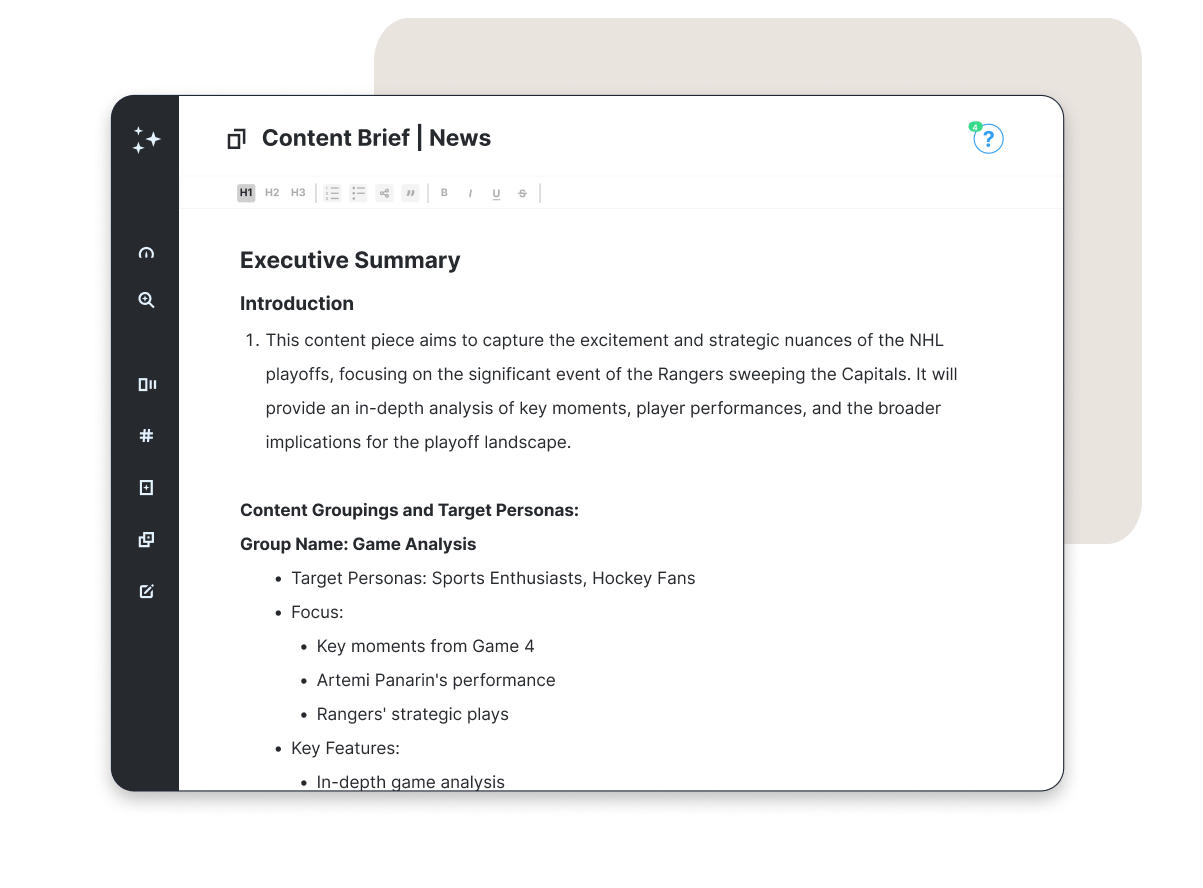
My stance: MarketMuse can be brilliant, but it’s easiest to overbuy. If you’re a small team, the question isn’t “which tool is more advanced?” It’s “which tool matches how we actually work?”
The real difference: practical workflow layer vs enterprise-style depth
The simplest way to understand this comparison is by the kind of decisions you need the tool to support:
- Frase helps you make page-level execution decisions faster: what to cover, how to structure the piece, what gaps to fill, and how to optimize a draft.
- MarketMuse helps you make portfolio-level decisions with more depth: what topics matter, where you have authority, what to prioritize, and how to standardize content improvements across a library.
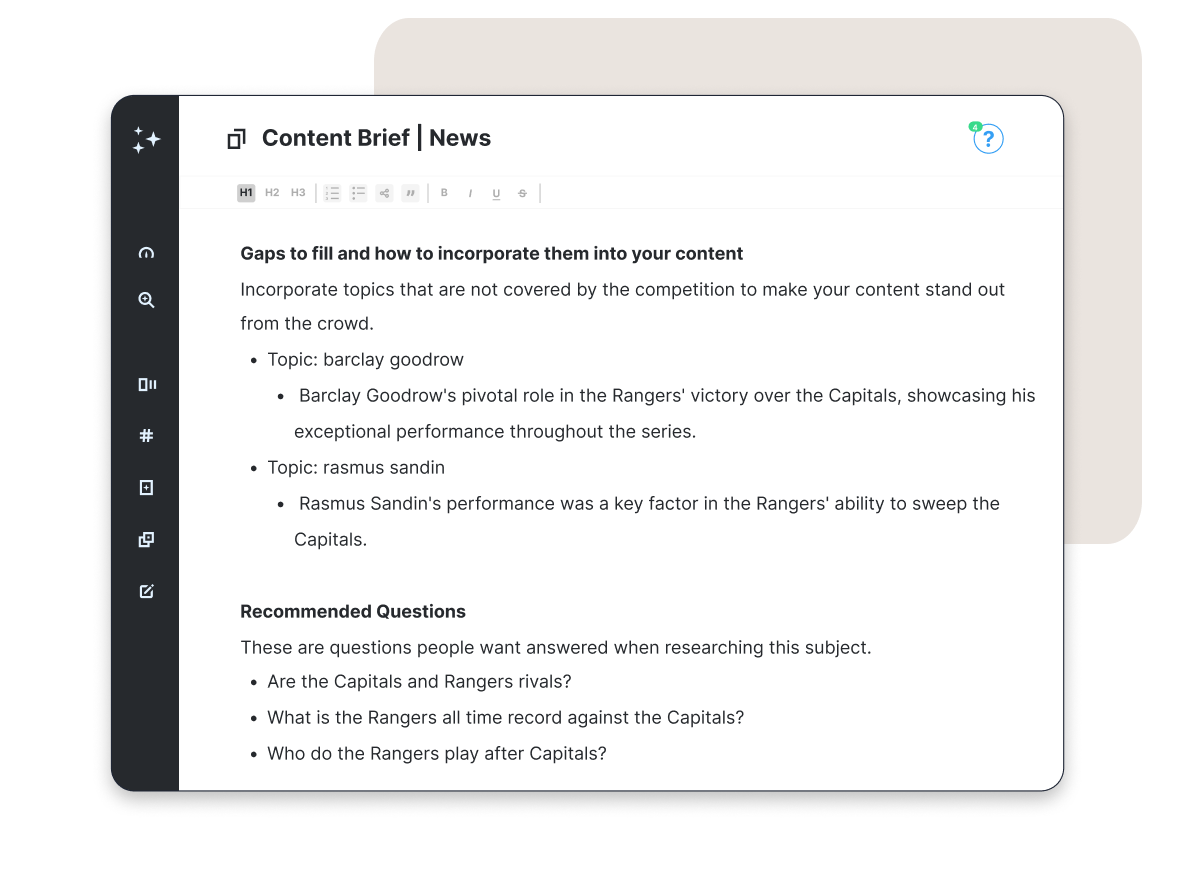
The expectation shift for many small teams: the “more powerful” platform isn’t automatically the better buy. Power only matters when you have the process and bandwidth to use it.
Workflow comparison: how small teams actually use each tool
1) Starting point: are you writing new content or managing an existing library?
Frase is commonly adopted when a team is actively producing new content and wants to speed up research + briefs. MarketMuse often lands better when you’re trying to manage a content library strategically—especially if you’re making “update vs create” decisions across many topics.

2) Briefing: who needs a brief and how structured does it need to be?
Both tools can support briefs. The difference is the posture:
- Frase briefs are often used to get writers moving quickly with SERP-derived structure and coverage guidance.
- MarketMuse briefs often feel more “strategic,” especially if you’re aligning multiple stakeholders or optimizing content against a broader topic model.
3) Optimization: checklist guidance vs optimization inside a larger system
Frase tends to be treated as a practical checklist and editing assistant. MarketMuse tends to be treated as an optimization component inside a more strategic platform—especially for teams doing systematic content upgrades.
When MarketMuse is overkill for small teams
This is the part most comparisons dodge, but it’s where the money is.
MarketMuse can be overkill if:
- Your content operation is still “keyword-to-article” and you don’t have a structured planning cadence.
- You’re not maintaining a large library (or you’re not doing systematic refresh cycles).
- You don’t have time to operationalize the insights into a real editorial plan.
- Your team is small and generalist and needs fewer tools, not deeper tooling.

Here’s the candid caution: buying an enterprise-style platform won’t create a mature workflow. It will just reveal where you don’t have one yet.
When MarketMuse is justified (even for a smaller team)
MarketMuse is justified when the “system” is the product: you’re making strategic content decisions across many pages, and you need a tool that helps you prioritize and standardize improvements.
It tends to make sense if:
- You have a large library and refreshes are a planned, recurring program (not “when traffic drops”).
- You need prioritization signals to decide where to invest writing and optimization time.
- You’re coordinating multiple stakeholders and want a platform that supports content strategy documents and structured planning.
A softer human verdict: if you already know you’ll use inventory intelligence and planning depth every week, MarketMuse can pay off. If you’re hoping it will magically turn scattered content into strategy, it will feel expensive fast.
Cost and value: the “real” trade-off is time-to-value
Teams often reduce this to “MarketMuse costs more.” Sometimes it does. But the bigger issue is time-to-value:
- Frase usually delivers value quickly because it plugs into a simple loop (brief → write → optimize).
- MarketMuse can deliver bigger strategic value, but it often requires more setup, more process, and more consistent usage to pay back.
My editorial bias here is practical: if your team is small, you want to optimize for adoption. A tool that’s used weekly beats a tool that’s admired monthly.
If you’re stuck, run this 60-minute test (and stop guessing)
- Pick one real keyword you plan to publish this month.
- Create a brief in each tool (or as close as you can) and ask: would a writer produce a strong first draft from this?
- Take an existing article you want to refresh and ask: did the tool identify meaningful gaps, or just suggest “more topics”?
- Decide what the tool replaces. If it replaces nothing, you’re buying overlap.
That last step is the one teams ignore. New software is easiest to justify when it retires an old habit, spreadsheet, or subscription—not when it simply adds another login.
Where to go next
- For broader context on Frase (strengths, limitations, and who should skip it), start with this Frase review for SEO content teams.
- If you’re still sorting the category and want a shortlist by workflow, see best Frase alternatives by workflow.
- If you want a bigger field of options, this broader view helps: best SEO content optimization tools in 2026.
Next step
If you’re leaning toward Frase because you need a practical tool your team will actually use, make the plan decision based on your publishing rhythm and collaboration needs—not the “biggest” tier.