
 admin
admin 
If you’re deciding between Frase vs Surfer SEO in 2026, you’re not really choosing “the best content optimization tool.” You’re choosing a workflow: how you research, how you brief, how you write, how you edit, and what kind of guidance you want the tool to apply along the way.
That’s why most head-to-head comparisons feel unhelpful. They list features, but they don’t tell you what happens on a Tuesday afternoon when a writer is stuck, an editor is trying to tighten a draft, and you need the piece to ship.
One observed reality: teams are producing more pages with fewer calm hours to do it. That’s exactly when tools become dangerous—because “optimize faster” can quietly turn into “publish more average content.”
Quick verdict: choose Frase if you want a briefing-first workflow; choose Surfer if you want an editor-first workflow
Choose Frase if…
- Your bottleneck is research + briefing and you want a smoother path from SERP understanding to outline to draft.
- You manage briefs (for yourself or writers) and need repeatable structure, questions, and coverage targets.
- You refresh older content and want a systematic way to identify missing sections and update opportunities.
- You prefer lighter guidance while writing and you don’t want your team to write purely to a score.
Choose Surfer SEO if…
- Your bottleneck is on-page optimization QA and you want a strong “content editor” experience while drafting and editing.
- You run high-volume production and you need consistent guidelines that writers can follow without constant strategist involvement.
- You like prescriptive optimization signals (terms, structure targets, score feedback) as part of your process.
- Your team already has briefs handled elsewhere, and you mainly need the optimization layer to tighten execution.

Choose neither (for now) if…
- You publish sporadically and don’t have a consistent process to plug the tool into.
- Your quality issues are strategic (unclear angle, weak expertise, no editorial bar) and you’re hoping software will solve it.
- You’re already paying for overlapping tools and nothing is actually being replaced.
My stance: if you pick the tool that matches your bottleneck, you’ll feel the payoff within weeks. If you pick based on hype, you’ll feel regret within a billing cycle.
The real difference: Frase helps you get to a solid brief; Surfer helps you optimize inside the editor
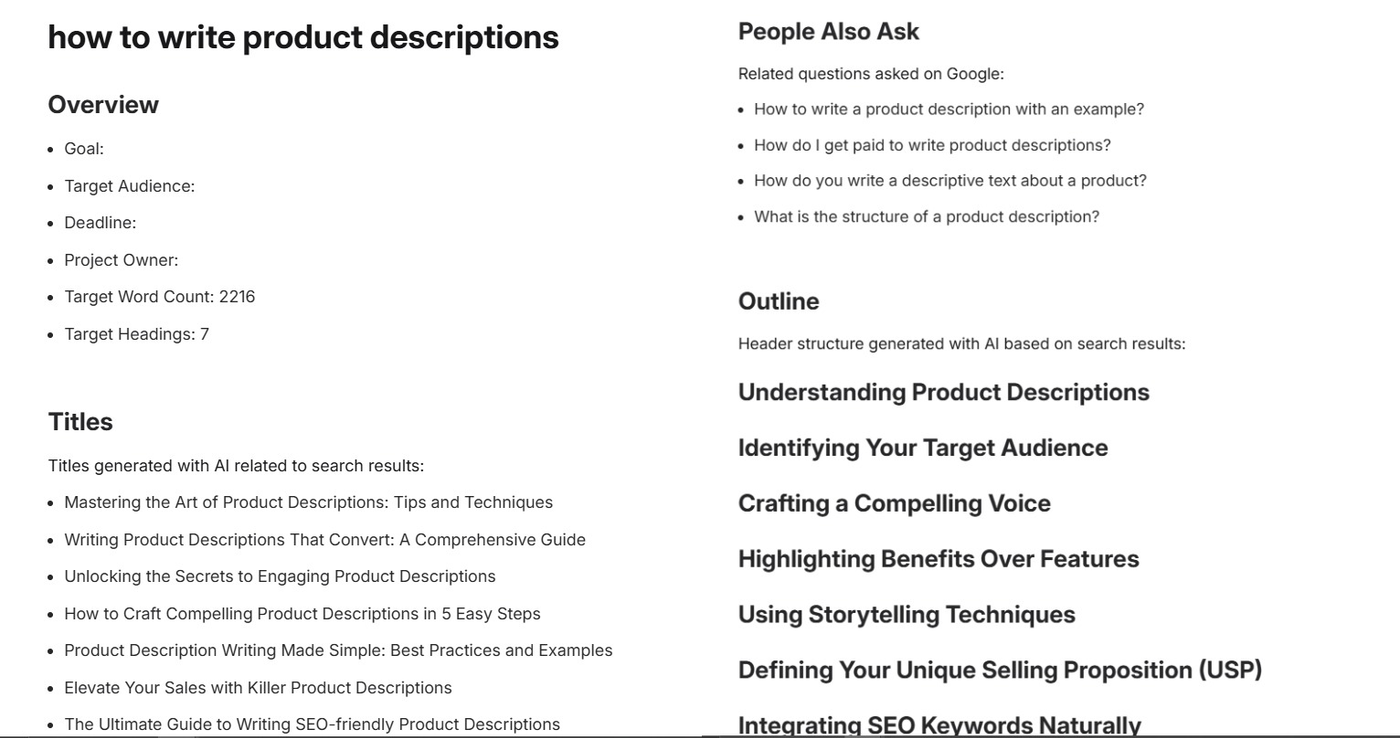
Here’s the expectation shift that makes this comparison easier: Frase is often strongest before the draft is “real,” while Surfer is often strongest once the draft exists.
Both tools can touch multiple stages. But in practice:
- Frase tends to pull value from the front of the workflow: SERP research, content briefs, outline building, and “what should we cover?”
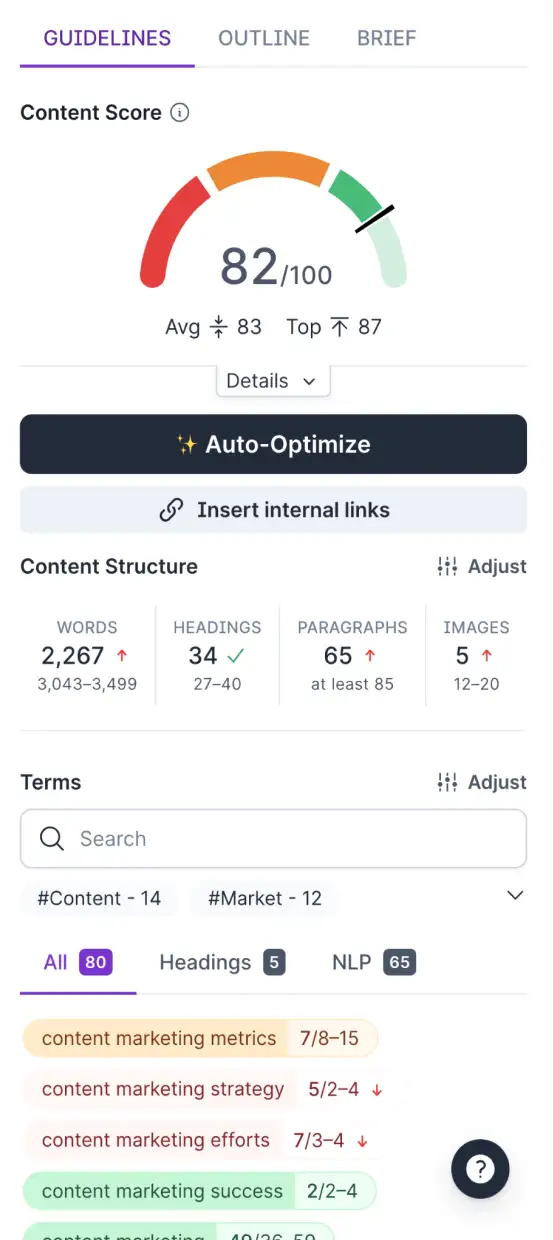
- Surfer tends to pull value inside the writing/editing environment: structure targets, term usage guidance, and optimization feedback while you edit.
Workflow comparison: keyword → research → outline → draft → optimize
Stage 1: SERP research and “what good looks like”
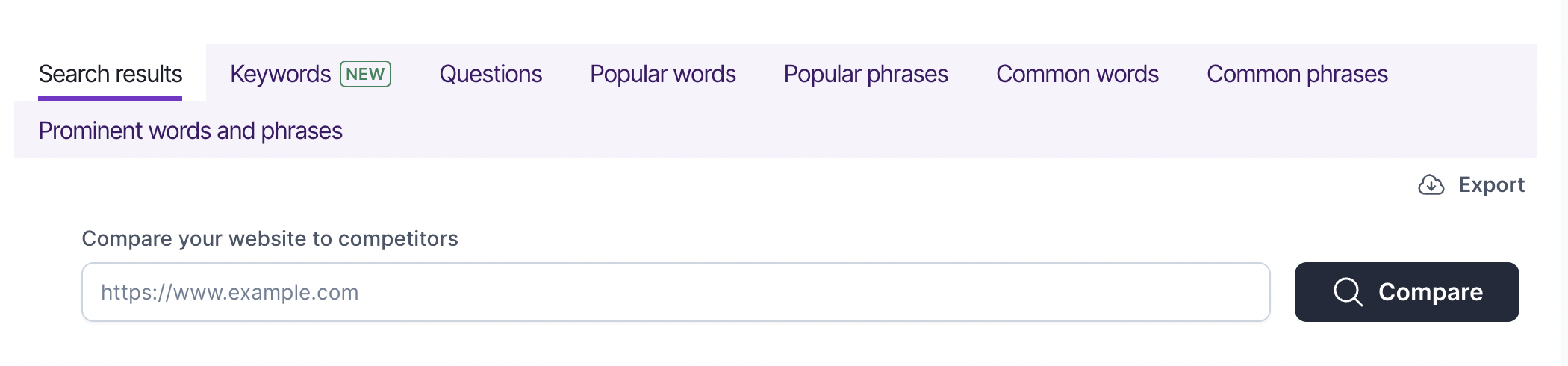
Frase is often used to shorten the “blank page” phase: you’re trying to understand what ranking pages cover, what questions keep showing up, and what structure is common.
Surfer also pulls from SERP-level competitor analysis, but many teams experience it primarily through the editor: the output is guidance and constraints you use while drafting.
Stage 2: Brief and outline quality
This is where the split becomes obvious.
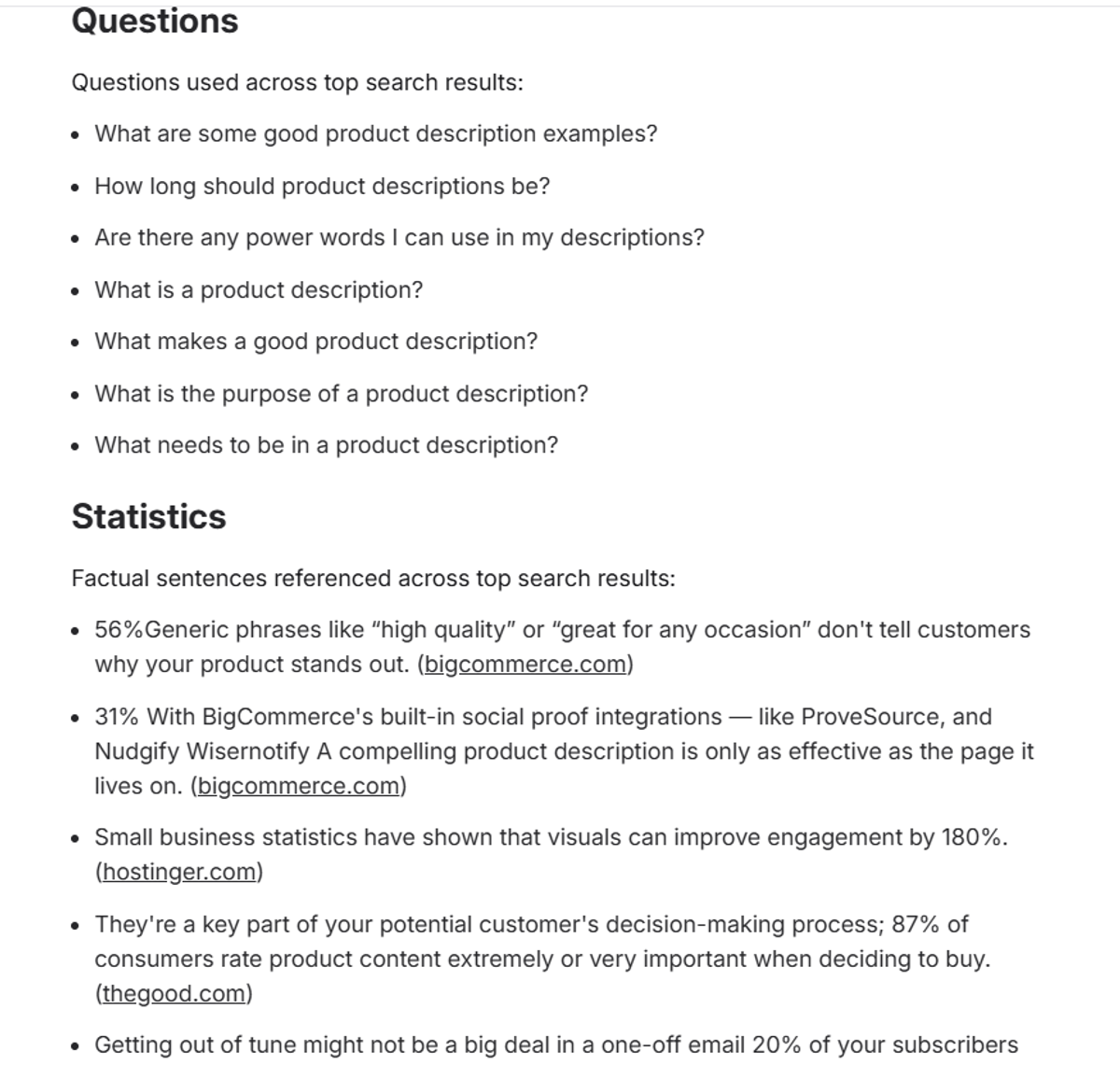
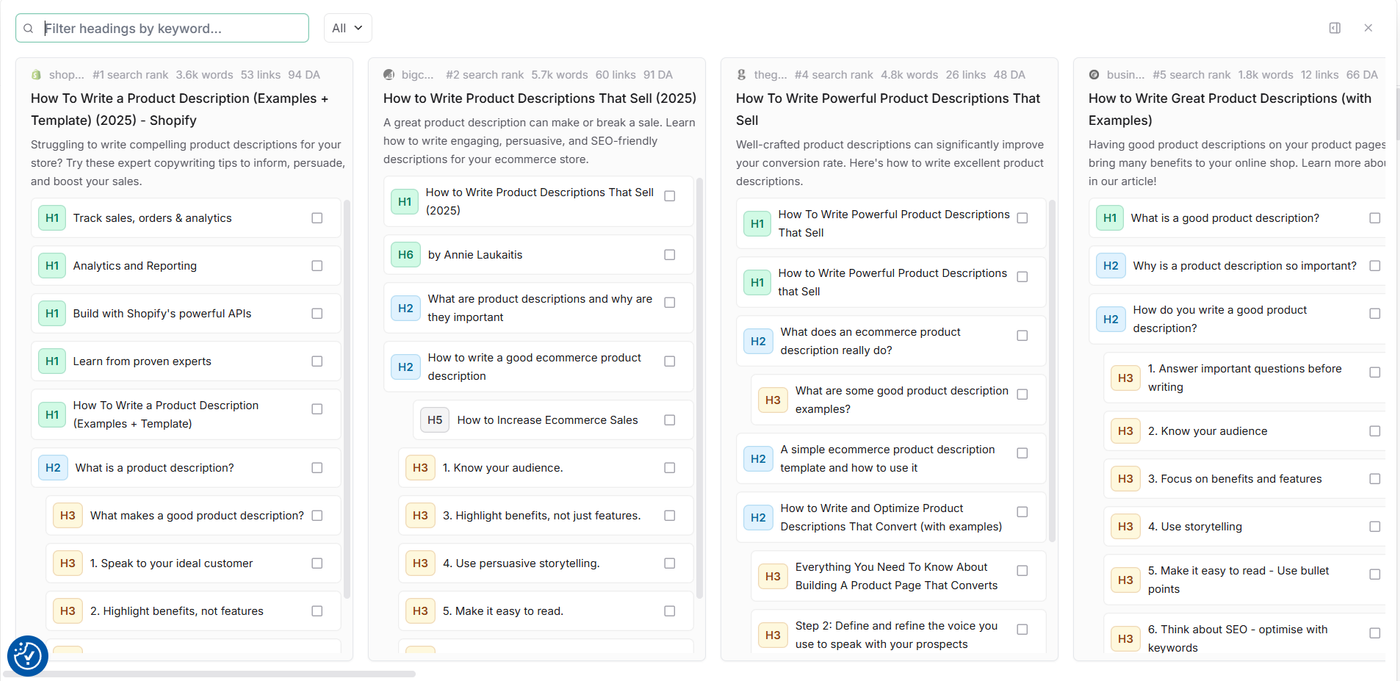
Frase is typically chosen by people who care about turning SERP research into a brief that a writer can actually follow: sections, questions, supporting points, and coverage targets.
Surfer can support outlines and structure targets, but if “brief creation” is your main job, Surfer often ends up being the second tool (optimize after the brief exists).
Stage 3: Drafting and editing experience
If your team writes inside the tool (or wants to), Surfer is usually the stronger “editor environment” pick. It’s designed to keep writers aligned with structure and term guidance while the text is being produced.
Frase can support drafting, but it’s most reliable when you treat drafting as a step you still own and use the tool for structure, research inputs, and coverage QA.
Stage 4: Optimization guidance and the “score trap”
This is the part that can either improve your content or slowly flatten it.
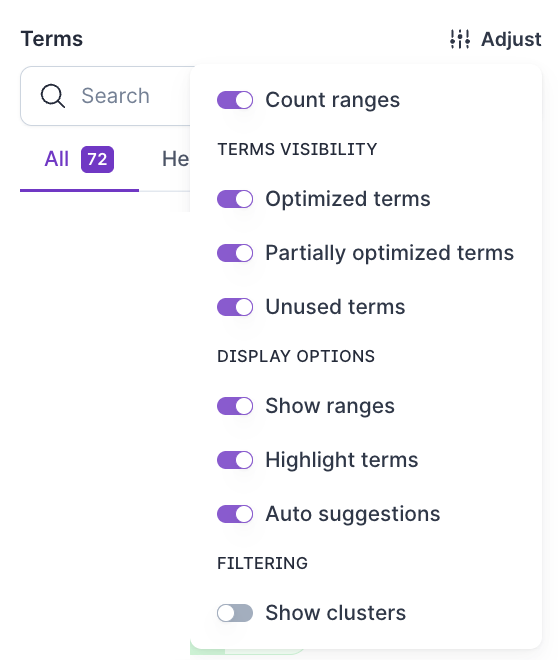
Surfer tends to be more prescriptive: it can push teams toward hitting targets (terms, structure ranges, score thresholds). That’s useful for production consistency—but risky if writers treat metrics as the goal.
Frase can still be used for optimization, but it often lands better for teams that want guidance without turning content into a compliance exercise.
Here’s the candid caution: if your team already struggles with clarity and originality, prescriptive optimization can make the writing look “more SEO” while becoming less useful. It’s not the tool’s fault, but it is the failure mode you should plan for.
Strengths and weaknesses by scenario (no vague “it depends”)
Scenario A: solo affiliate marketer publishing weekly
Frase tends to win if you’re doing your own briefs and you want faster SERP research + a structured outline without building a complicated stack.
Surfer tends to win if you like writing inside an optimization editor and you want the tool to push you toward tighter on-page targets.
Decision rule: if research and outlining is the time sink, lean Frase. If editing and optimization QA is the time sink, lean Surfer.
Scenario B: in-house team with multiple writers and an editor
Surfer tends to win when the goal is standardized execution: writers follow the editor’s guidelines, editors check drafts against consistent targets, and you want fewer “why is this missing?” conversations.
Frase tends to win when your system depends on brief quality: you’re trying to align writers around intent, angle, and coverage before the draft exists.
Decision rule: if you already have strong briefs, Surfer may add more daily value. If briefs are inconsistent, Frase is often the better “first fix.”
Scenario C: agency producing content across multiple clients/sites
Surfer tends to win when you want a scalable, repeatable editor process that writers can follow across projects.
Frase tends to win if your agency sells strategy and briefs (or you need to produce briefs quickly across varied topics).
Decision rule: pick the tool that matches what you’re trying to systematize: briefs (Frase) vs execution QA (Surfer).
Scenario D: you’re mainly buying an AI writer
If your actual goal is “generate drafts fast,” you’re shopping in a different aisle. Both Frase and Surfer touch AI drafting, but neither is a pure drafting-first tool in the way many creators expect. You can make them work for drafting—but the value is still tied to research, structure, and QA.
Pricing and value: what “worth it” usually means in practice
I’m not going to pretend a price tag alone answers “Frase or Surfer.” Value depends on repetition: how many times per month you run the workflow end-to-end.
- Frase tends to feel worth it when you repeatedly create briefs, outlines, and refresh plans. The payoff is time saved before writing starts.
- Surfer tends to feel worth it when you repeatedly use the editor to produce and QA drafts. The payoff is consistency and guidance inside the writing environment.
The subtle cost people miss: if a tool makes writers produce “optimized” content that requires heavy editorial rewrite, you didn’t save time—you moved it.
If you’re stuck, run this 45-minute test (and stop guessing)
- Pick one real keyword you’ll publish this month.
- In Frase: build a brief and outline, then ask: would a writer understand what to write and why?
- In Surfer: paste in a partial draft (or write a section), then ask: does the guidance make the draft clearer, or just more compliant?
- Decide what the tool replaces in your current process. If it replaces nothing, you’re signing up for overlap.
That last step is the voice-of-experience line I wish more teams listened to: new tools are easiest to justify when they retire an old habit or subscription.
Final verdict by user type
If you’re a solo creator or small affiliate site
Pick Frase if you want briefing and research structure to be faster and more repeatable. Pick Surfer if you want an optimization editor to guide writing and tighten on-page execution.
If you’re an in-house team with writers and an editor
Pick Surfer if you need standardization inside the editor and consistent QA signals. Pick Frase if your biggest gains will come from better briefs and clearer pre-writing alignment.
If you’re an agency
Pick Surfer if you need a scalable editor process across clients. Pick Frase if you sell (or rely on) brief quality and research-led outlining as a differentiator.
A softer human verdict: the “better” tool is the one your team will still be using in 90 days—because it made work easier, not because it promised bigger rankings.
Internal resources if you want to go deeper
- Frase review for SEO content teams (strengths, limits, and who should skip)
- Best Frase alternatives by workflow (if neither tool feels like a clean fit)
- Best SEO content optimization tools in 2026 (broader shortlist by category)
Next step
If you’re leaning Frase, don’t commit based on vibes—verify the current plan structure and pick the tier that matches your publishing rhythm.
Check the current Frase plan options.