
 admin
admin Internal linking is one of the fastest levers you control in AI search SEO—especially on new or mid-authority domains.
The winning pattern is simple: build a hub (pillar) that defines the topic, publish clusters that answer sub-questions, and connect everything to money pages (reviews/comparisons/tools) with consistent, descriptive anchors.
This creates topical clarity, distributes authority, improves crawl paths, and makes your site easier for AI systems to understand and cite.
1) Why Internal Linking Matters More in AI Search SEO
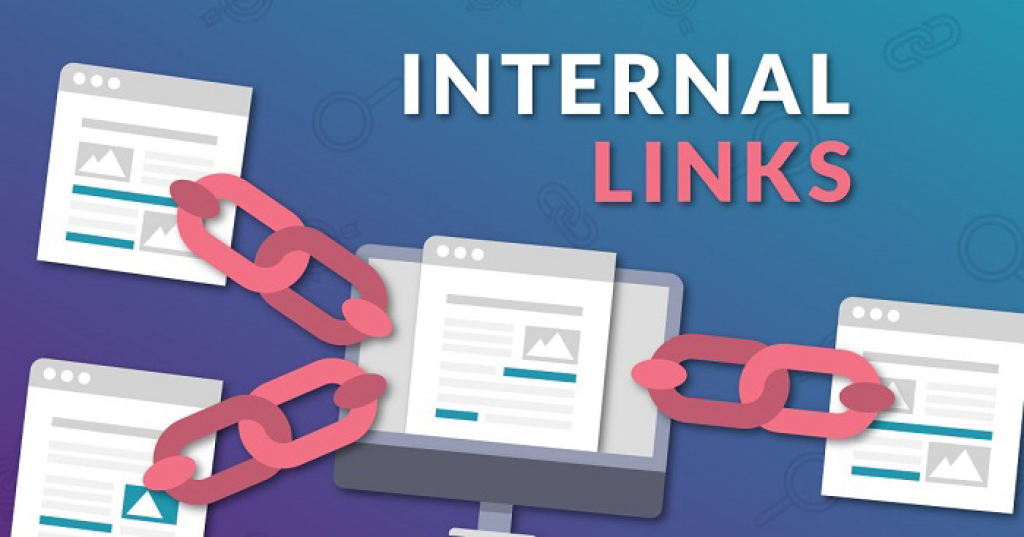
Classic SEO treats internal links as “navigation.” AI-first SEO treats them as meaning. Internal links tell machines:
- What a page is about (via anchor text + surrounding context).
- Which pages are central (hubs) vs supporting (clusters).
- How concepts relate (entities connected across articles).
- Where trust accumulates (pages referenced by many relevant pages often become “source-like”).
In AI-driven search experiences, clarity and coherence are huge. If your site reads like a connected knowledge base, it becomes easier to extract, summarize, and cite. Internal linking is how you build that coherence at scale.
2) The Hub ↔ Cluster ↔ Money Model (The Only Model You Need)
This model creates a clean topology that both humans and machines understand.
Hub (Pillar)
The hub is the master page that explains the topic universe and links to the best supporting pages. Example: AI Search SEO: The Practical AI-First SEO Playbook.
Cluster pages
Clusters are focused deep dives that support and expand the hub. Example clusters in this hub:
- Answer-First Writing Template
- Entity SEO Checklist for Beginners
- AI SEO KPIs (GSC + GA4)
- GEO explained / AI Overviews SEO
Money pages
Money pages are commercial-intent pages: product reviews, comparisons, “best tools” lists, or service pages. They should be supported by clusters (so they don’t look like thin monetization pages).
Core idea: clusters earn topical trust, hub consolidates it, and money pages convert it.
3) Internal Link Roles: Not All Links Are Equal
When you internal link, each link should have a job. Here are the three jobs that matter most:
- Discovery links: help search bots find pages faster (important for new pages).
- Context links: help machines understand relationships between entities.
- Authority links: pass strength from pages with more visibility to pages you want to push.
In most sites, links are added randomly (navigation, tag pages, “related posts”). That creates noise. AI-first SEO rewards intentional linking.
4) The “Perfect” Internal Link Pattern for This AI Search SEO Hub
Below is a simple link map you can copy for this cluster. Adjust the titles and slugs to your site.
| Page type | Example page | Must link to | Recommended anchor style |
|---|---|---|---|
| Hub (pillar) | AI Search SEO Playbook | All clusters + 1–3 money pages | Descriptive: “answer-first writing template” |
| Cluster | Answer-First Writing Template | Hub + 1–2 related clusters | Entity anchors: “AI search SEO playbook” |
| Cluster | Entity SEO Checklist | Hub + internal linking cluster | Relationship anchors: “internal linking blueprint” |
| Money page | Best AI SEO Tools | Hub + 2–4 clusters (templates, KPIs, entity) | Intent anchors: “AI-first content workflow” |
Rule: Every cluster should link back to the hub within the first 30–40% of the article (not only in the footer).
5) Anchor Text: The AI-Friendly Way to Write Internal Links
Anchor text is one of the cleanest signals you can give search systems about what a page represents. In AI search SEO, anchors should reinforce entities and intent.
Good anchor patterns
- Entity anchors: “entity SEO checklist,” “answer-first writing template,” “AI search SEO playbook.”
- Intent anchors: “how to track AI SEO KPIs,” “internal linking blueprint.”
- Relationship anchors: “connect clusters to money pages,” “hub and cluster model.”
Anchors to avoid
- “click here” / “read more” (no meaning)
- Over-optimized exact match anchors repeated everywhere
- Anchors that don’t match the destination content
Operator rule: Use mostly descriptive anchors, and vary lightly without changing the entity label. Consistency beats cleverness.
6) Where to Place Internal Links (So They Actually Work)
Placement matters because links placed in meaningful context carry stronger topical signals than links dumped at the end of a post.
High-impact placement zones
- Intro (after TL;DR): 1 link to the hub (“AI search SEO playbook”).
- After a definition block: link to the deeper explainer (“entity SEO checklist”).
- After a checklist/table: link to “how to measure” or “how to implement.”
- Before FAQ: link to a related cluster as “next step.”
Low-impact placement zones
- Mass “related posts” widgets with weak topical alignment
- Site-wide footer link lists stuffed with dozens of links
- Tag archives that generate thin internal link noise
7) Internal Linking Checklist (7-Day Upgrade You Can Do Fast)
If you already published the hub and two clusters, here’s a practical 7-day internal linking sprint that usually moves the needle.
- Day 1: Add “Hub ↔ Cluster” links in both directions (hub links to all clusters; each cluster links back to hub).
- Day 2: Add 1–2 cross-links between clusters (template ↔ entity checklist ↔ internal linking ↔ KPIs).
- Day 3: Create a “Start here” block in the hub pointing to the best 3 clusters for beginners.
- Day 4: Identify 10 older pages that mention related entities and add contextual links to the hub or a relevant cluster.
- Day 5: Add a “Next step” section near the end of each cluster (one link to hub + one link to the next cluster).
- Day 6: Check for orphan pages (pages with zero internal links) and connect them.
- Day 7: Review anchors for clarity and remove any irrelevant link noise.
8) Internal Linking for Money Pages (So They Don’t Look “Thin”)
If you monetize (affiliate, SaaS, services), internal linking is what keeps money pages from feeling like standalone sales pages.
How to support money pages using clusters
- Money pages should link to 2–4 clusters that justify the recommendation.
- Clusters should link to money pages only when it’s naturally relevant (don’t force it).
- Hubs should link to money pages as “recommended next steps” or “tool stack” resources.
Example linking pattern (affiliate site)
- Cluster: “AI SEO KPIs” → link to “Best AI SEO Tools” as “tools to track and improve these metrics.”
- Money page: “Best AI SEO Tools” → link back to “Answer-first template” and “Entity SEO checklist” to build trust.
- Hub: “AI search SEO playbook” → links to both as part of a complete workflow.
Operator rule: If your money page can’t confidently link to educational pages that support it, your money page is probably not deep enough yet.
9) How Many Internal Links Should You Add? (Practical Numbers)
There is no perfect number, but you can use safe ranges that work well in practice:
- Hub (pillar): 8–25 internal links (primarily to clusters and a few money pages).
- Cluster posts: 3–8 internal links (hub + 1–3 clusters + occasional money page if relevant).
- Money pages: 5–12 internal links (hub + supporting clusters + related money pages where appropriate).
Focus on relevance, not volume. A smaller number of highly relevant links beats dozens of random ones.
10) Common Internal Linking Mistakes (What Breaks the Model)
- Orphan pages: no internal links pointing to them.
- Over-linking site-wide: huge menus/footer blocks that dilute topical signals.
- Random cross-links: linking across unrelated topics just to “add links.”
- Anchor spam: repeating exact-match commercial anchors everywhere.
- Thin hub pages: a hub that doesn’t actually summarize and guide the cluster.
- Relying only on “related posts” plugins: they often generate weak topical alignment.
11) FAQ
How does internal linking help with AI search SEO specifically?
It clarifies entity relationships and topical structure. AI systems can interpret your site as a connected knowledge base, making it easier to extract, summarize, and cite your content as a reliable source.
Should I link to money pages from informational clusters?
Yes, but only when the link is a natural next step. Over-linking to money pages from every post can reduce trust. Use “tool stack” or “recommended next” contexts rather than forced CTAs.
Is it okay to use the same anchor text repeatedly?
Some repetition is good for entity consistency, but don’t spam exact-match anchors. Keep anchors descriptive and consistent with the destination’s actual topic.
Do navigation menus count as internal links?
Yes, but contextual links inside the content usually carry stronger topical meaning. Use navigation for usability, and use contextual internal links for semantic reinforcement.
How do I find the best pages to link from?
Start with pages that already have impressions or traffic (Search Console). Those pages often have more discovery and relevance signals, so linking from them can accelerate indexing and visibility for newer pages.
How long does it take for internal linking changes to show results?
Indexing improvements can show within days on active sites. Ranking and citation improvements typically appear over weeks as the cluster grows and search systems re-evaluate topical structure.
12) Next Steps (What to Publish Next)
To complete the core of this AI search SEO hub, your next cluster should be measurement-focused:
- Next cluster post: AI SEO KPIs: What to Track in GSC + GA4
- Link it like this: KPI post links to the hub + links back to Answer-first template and Entity SEO checklist.
Once the KPI post is live, you’ll have a full loop: write (answer-first), clarify (entity), connect (internal linking), and measure (KPIs).